This dissertation develops brain-charting methods to support precision psychiatry and neurology by measuring how an individual’s brain differs from population norms. Using normative modelling, it replaces conventional case-control averages with personalised deviation scores across age and disease progression. The research introduces warped normative models for non-Gaussian imaging data and multivariate extreme-value methods for identifying unusual patterns across brain regions. Applications to rare copy-number variants and Parkinson’s disease reveal individual differences obscured by group averages. The defence also examines longitudinal monitoring, environmental influences, resilience, ethics, stigma and clinical implementation, while emphasising that brain deviations alone cannot define pathology or determine treatment.

This research develops a targeted anti-VEGF therapy for wet age-related macular degeneration that can be injected under the skin rather than directly into the eye. In animal studies, the drug successfully reached the eye and reduced abnormal blood vessel growth, offering a safer, cheaper, and more convenient treatment for preventing blindness.

This research improves drug formulations by developing predictive tools for amorphous solid dispersions that increase drug solubility while allowing higher drug loading in a single tablet. The work aims to reduce pill burden, improve medication adherence, lower pharmaceutical development costs, and make treatments more effective for patients with chronic illnesses.

This research seeks blood-based biomarkers that predict which people infected with Chagas disease will later develop life-threatening cardiomyopathy. By analysing immune proteins in blood samples from Bolivia, it aims to enable earlier diagnosis, targeted monitoring, and preventative treatment, offering a model for predicting and preventing many chronic diseases before irreversible damage occurs.

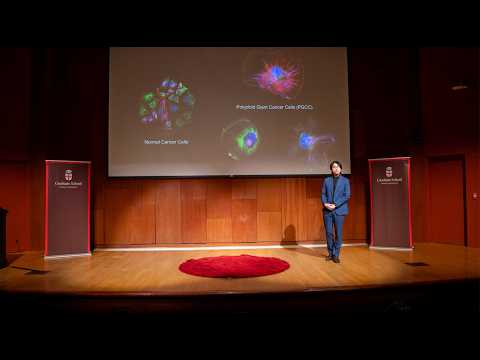
This research investigates polyploid giant cancer cells, a highly treatment-resistant population responsible for cancer relapse. By studying their structural biology and dependence on lipid metabolism, the work identifies metabolic vulnerabilities that can be targeted alongside chemotherapy, offering a promising strategy to eliminate resistant cancer cells and improve long-term treatment outcomes.