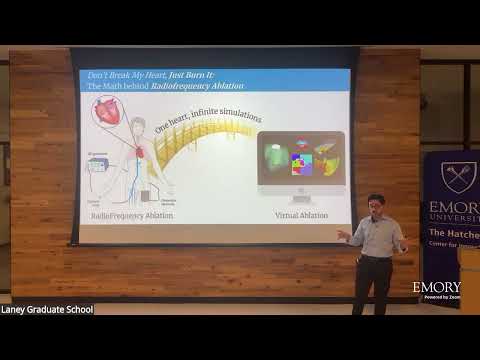
This research develops patient-specific digital twins of the heart to improve radiofrequency ablation for cardiac arrhythmias. By simulating heat transfer, tissue damage, and electrical activity, these computational models could improve treatment accuracy, reduce repeat procedures, accelerate medical device development, and advance the future of personalised cardiovascular medicine.
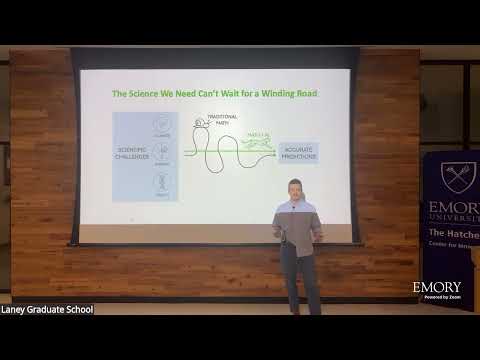
This research uses artificial intelligence to accelerate scientific simulations by learning patterns from traditional mathematical models. Rather than replacing physics, the AI predicts efficient starting points for complex calculations, producing accurate results much faster. The approach could dramatically speed up research in fields such as medicine, engineering, and climate science.
This research uses artificial intelligence to analyse immune-system data and predict vaccine effectiveness. By identifying early biological signals associated with strong, long-lasting immunity, the work aims to improve vaccine design, personalise vaccination strategies, and support development of universal vaccines capable of protecting against rapidly evolving infectious diseases.
This research develops a model to identify unreliable or manipulated environmental, social, and governance (ESG) claims made by South African companies. Using prior studies and a large ESG database, the model detects authenticity, flags potential manipulation, and cross-checks with known scandals. The goal is to measure genuine ESG commitment and protect stakeholders from misleading sustainability reporting.