This research investigates the safety of hydrogen vehicles and refuelling infrastructure using advanced computer simulations of fires and explosions. Findings suggest protective barriers can reduce blast pressures by 60–90%. The work provides evidence for future safety standards, helping enable wider adoption of hydrogen transportation while protecting people, property, and communities.
This research develops electrostatic artificial muscles for underwater robots inspired by the movement of fish and sharks. Unlike noisy propeller-driven systems, these soft actuators enable quieter, more efficient swimming that minimises disturbance to marine ecosystems, offering a promising alternative for environmental monitoring, reef surveys, and underwater infrastructure inspection.

2026
This research investigates cognitive diversity in software engineering. Through eye-tracking and think-aloud studies, it shows that engineers approach problems differently, while existing software tools often favour particular thinking styles. Designing more inclusive tools could improve performance, broaden participation in decision-making, and reduce unintended bias in the technologies we build.
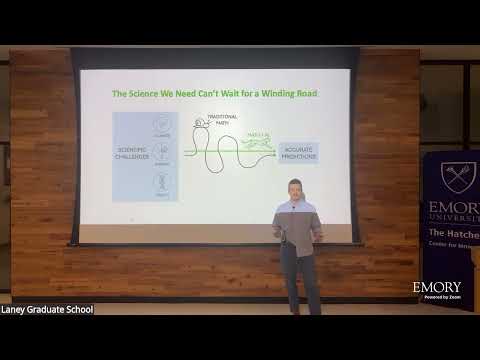
This research uses artificial intelligence to accelerate scientific simulations by learning patterns from traditional mathematical models. Rather than replacing physics, the AI predicts efficient starting points for complex calculations, producing accurate results much faster. The approach could dramatically speed up research in fields such as medicine, engineering, and climate science.

This research develops a distributed multi-robot task allocation framework that enables autonomous robots to estimate tasks, share information, coordinate assignments, and avoid collisions without relying on a central server. The approach improves efficiency, scalability, and resilience, with applications in emergency response, particularly supporting firefighters during life-saving operations.
2026
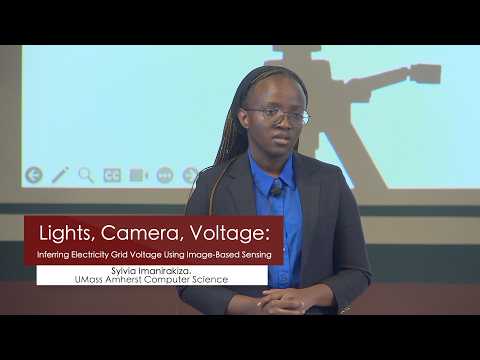
This research uses computational photography and machine learning to monitor electricity quality through the flickering patterns of everyday lights. By analyzing images captured in cities such as Kampala and Nairobi, the work offers a low-cost method for measuring voltage instability and improving power-grid planning in underserved communities lacking reliable electricity infrastructure.

2026
This research investigates zinc batteries as a safer, cheaper alternative to lithium batteries. By studying the microscopic passive layer formed between zinc and electrolyte, it identifies mechanisms that improve performance and prevent failure. The work aims to enable more reliable, ethical, and fire-safe energy storage technologies through detailed materials analysis.

This research addresses overheating in 5G base stations, where vertically mounted electronics create dangerous hotspots. By using passive vapor chamber cooling, heat is efficiently redistributed without added energy use. Experimental and modeling work shows vapor chambers improve reliability and sustainability, supporting faster, more stable 5G and future network infrastructure.