This research investigates how landslides disrupt New Zealand's road network. By analysing past landslides, linking landslide severity to road impacts, and combining these relationships with landslide forecasts, the project aims to predict future road closures, improve emergency planning, reduce community isolation, and enhance public safety during severe weather and earthquakes.
2026
This dissertation examines whether describing crowd disasters as “stampedes” affects how people assign blame. The talk argues that the term wrongly implies irrational, selfish victim behaviour, obscuring structural failures in planning and crowd management. Experiments will test whether language shifts blame from systems to victims in perceptions of crowd crushes.
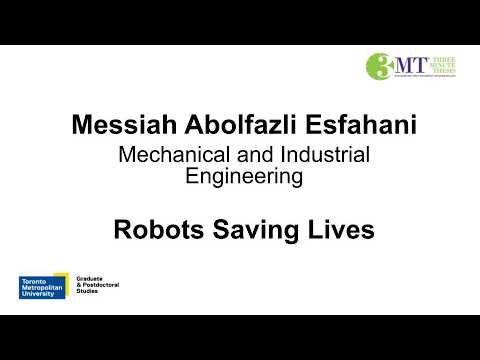
This research develops a distributed multi-robot task allocation framework that enables autonomous robots to estimate tasks, share information, coordinate assignments, and avoid collisions without relying on a central server. The approach improves efficiency, scalability, and resilience, with applications in emergency response, particularly supporting firefighters during life-saving operations.
2026
This research examines the impact of stand-your-ground laws on public safety. While widely adopted, the findings show no large or immediate effects on homicide or related outcomes. However, small, uncertain effects may exist, and when scaled across many interactions, these can influence behavior and contribute to real-world consequences in everyday confrontations.