Blog

AI Slop is Drowning the Internet

Kurzgesagt
Kurzgesagt is an educational animation organisation founded by Philipp Dettmer in 2013 that produces rigorously researched videos on science, philosophy, politics, and psychology. In a recent video, “AI Slop Is Destroying The Internet,” they warn that the internet is being flooded with low-effort AI-generated content designed to capture attention, leading to what they call a potential “epistemic collapse.” While AI tools can appear highly competent, Kurzgesagt found that although much AI-generated research output seems accurate, a significant portion contains confidently presented fabrications, revealing that such systems optimise for coherence rather than truth. As AI increasingly cites and reinforces other AI-generated material, misinformation risks becoming self-validating, contaminating research, media, and even peer-reviewed literature. Kurzgesagt argue that AI should remain a tool rather than replace human judgment, emphasising the need for rigorous human research and creative integrity—an aim shared by My-thesis in its efforts to protect trustworthy, human-produced academic work from the spread of automated “AI slop.”

The Da Vinci Code: Search for Leonardo da Vinci’s DNA Teaches About Research Innovation

Representation of DNA
The Leonardo da Vinci DNA Project explores how modern scientific methods can address long-standing questions in art history. Its recent report of male human DNA on a red chalk drawing attributed by some to Leonardo demonstrates how non-invasive genetic sampling and collaboration between scientists, conservators, and art historians can produce new forms of evidence, even when attribution remains uncertain. The lack of confirmed DNA from Leonardo himself underscores a key reality of research: progress often comes through incremental insights rather than definitive proof. More broadly, the project reflects a methodological shift with important implications. Genetic traces on artworks may support authentication, reveal how objects were handled over time, and enrich provenance research alongside traditional scholarship. For researchers, particularly those early in their careers, it highlights the value of interdisciplinary approaches, innovation, and working productively with uncertainty.

Why Your Thesis Deserves a Voice

man with loudhailer
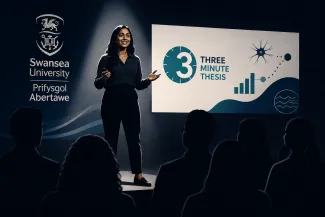
In a world increasingly shaped by AI, clear and confident spoken communication is becoming a key human skill—yet one rarely taught in academia. Researchers are trained to write for specialists, not to explain their work aloud in accessible language, even though speaking is how research is shared with funders, employers, collaborators, and the public. Experiences like the Three Minute Thesis show how powerful—and challenging—this skill can be. The platform my-thesis.org aims to address this gap by giving researchers a space to explain their work through short, jargon-free spoken presentations. By focusing on authentic human voice, it helps PhD students build confidence, clarity, and connection, while making their research more visible and accessible. In an AI-saturated world where machines can write, the message is clear: your voice is what makes your research distinctive—and worth hearing.

Why Video Emails Are a Powerful Tool for Research Communication

image of vido on laptop
Academic inboxes are crowded, making it easy for important research emails to be overlooked. Short video emails offer a practical way for researchers to stand out by increasing engagement, clarity, and response rates. Video makes research more memorable, humanises the researcher, and can explain complex ideas more efficiently than long text, without turning academic communication into marketing. Effective academic video emails should be brief, explanatory, and purpose-driven, with clear audio, captions, and external hosting to ensure accessibility and deliverability. Used for introductions, collaboration requests, feedback, teaching, or public engagement, video emails are positioned as a natural extension of spoken scholarly communication—supporting clarity, accessibility, and human connection in an increasingly busy academic landscape.

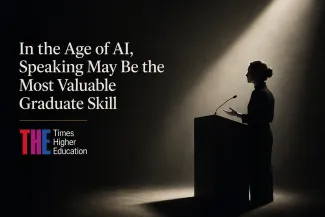
Verbal Communication Is the Most In-Demand Skill (3 min read)

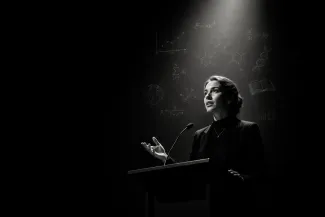
Man at podium
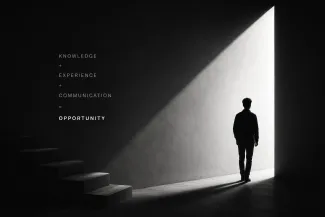
AI is transforming work, but communication remains the most in-demand skill across all industries. Research shows poor communication costs businesses trillions, while the rise of AI is actually increasing the value of human abilities like clarity, empathy, and persuasion — things AI can’t replicate. Strong communication now drives trust, leadership, collaboration, and the real impact of technical skills. As AI grows more capable, professionals who can explain ideas clearly and connect with others will have a major competitive advantage.