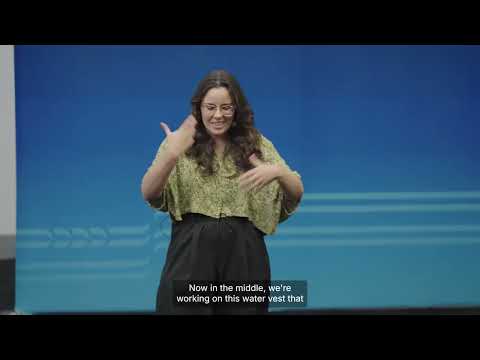
This research explores whether altering bodily sensations can change emotional experiences. By manipulating perceived heartbeat, blinking, and muscle tension through wearable devices and virtual reality, it demonstrates that emotions can be reshaped without changing physiology, opening new possibilities for treating trauma, anxiety, eating disorders, and other mental health conditions
2023
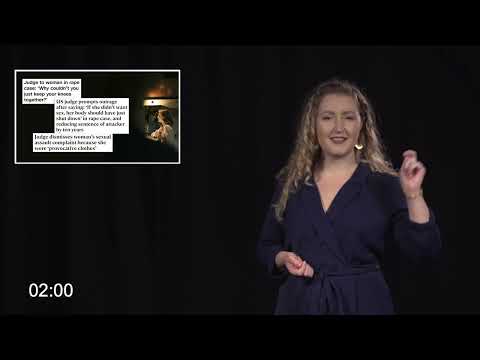
This research examines why bystanders often fail to intervene during sexual assaults. Drawing on belief in a just world theory, it investigates victim blaming, trivialisation, and psychological distancing. Using immersive staged films, the project aims to identify barriers to intervention and develop evidence-based campaigns encouraging bystanders to act more decisively.
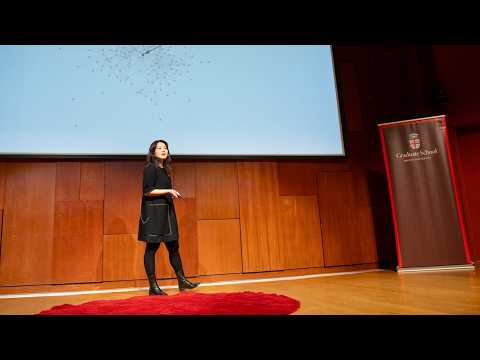
This research investigates how people strategically spread gossip by reasoning about social networks. Through laboratory experiments and real-world friendship networks, it shows that individuals balance social distance and popularity to maximize information spread while minimizing personal risk, revealing sophisticated cognitive mechanisms that support human communication and social intelligence.
This research demonstrates that moving visual stimuli can improve time perception to match the accuracy of auditory cues. Using a novel bouncing-ball experiment, it challenges the belief that hearing is always superior for judging time and offers new insights for assistive technologies, sports performance, human coordination, and cognitive psychology.
2026
This thesis examines who turns to AI for mental health support, rather than whether AI can be a therapist. Drawing on TherapyGPT forum analysis and ongoing experiments, the research identifies fear of judgment, trust in AI and past therapist failures as possible drivers of AI therapy use.
2026
This dissertation examines whether describing crowd disasters as “stampedes” affects how people assign blame. The talk argues that the term wrongly implies irrational, selfish victim behaviour, obscuring structural failures in planning and crowd management. Experiments will test whether language shifts blame from systems to victims in perceptions of crowd crushes.
2026
This neuroscience study investigated why time sometimes feels longer than it really is. By replacing simple geometric shapes with animal images, the researcher tested whether arousal or novelty drives temporal dilation. Results supported the oddball effect, showing that stimulus change, rather than emotional significance, was the primary factor influencing perceived duration.
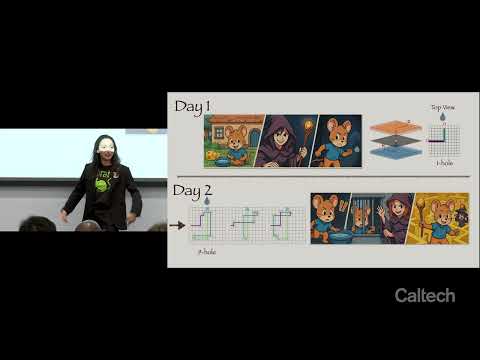
This research uses the Manhattan maze to study rapid learning and memory in mice. The study demonstrates that mice can acquire complex navigation sequences after only a few rewards, retain memories overnight, and generalize learned strategies to new mazes. The findings provide insights into few-shot learning, memory formation, and adaptive intelligence.
2026
This research shows that pauses in information streams alter decision-making. After a break, the brain increases effort, giving greater weight to subsequent information—a “peak-after-break” effect. A computational model explains this as a performance-effort tradeoff. Findings challenge traditional theories and suggest strategic pauses can shape attention, memory, and judgment.
This research examines how economic inequality affects children’s trust and generosity. In experimental games, children aged 5–9 who experienced unequal rewards trusted decision-makers less, regardless of whether they benefited. Repeated exposure to unfairness may spread mistrust to others, suggesting that early inequality can shape social attitudes and cooperative behavior.