
This research explores whether altering bodily sensations can change emotional experiences. By manipulating perceived heartbeat, blinking, and muscle tension through wearable devices and virtual reality, it demonstrates that emotions can be reshaped without changing physiology, opening new possibilities for treating trauma, anxiety, eating disorders, and other mental health conditions
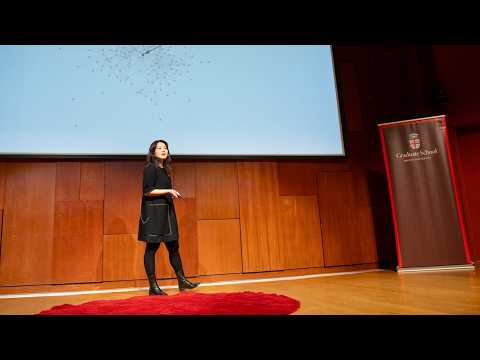
This research investigates how people strategically spread gossip by reasoning about social networks. Through laboratory experiments and real-world friendship networks, it shows that individuals balance social distance and popularity to maximize information spread while minimizing personal risk, revealing sophisticated cognitive mechanisms that support human communication and social intelligence.
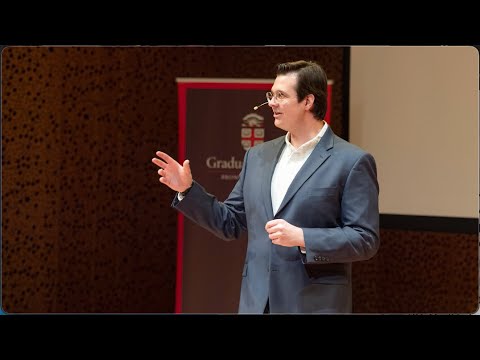
This research demonstrates that moving visual stimuli can improve time perception to match the accuracy of auditory cues. Using a novel bouncing-ball experiment, it challenges the belief that hearing is always superior for judging time and offers new insights for assistive technologies, sports performance, human coordination, and cognitive psychology.
2026
This research investigates how the brain makes decisions under uncertainty by studying mice navigating reward-based mazes. Rather than relying on memorisation, mice continually update mental models through active exploration. These findings improve our understanding of anxiety disorders and may inspire more adaptive artificial intelligence systems.
This research challenges the long-standing assumption that brain regions causing no errors during awake brain surgery are functionally unimportant. By measuring subtle delays in speech rather than errors alone, it introduces causal parametric mapping, offering surgeons a more sensitive way to preserve language function and improve patient outcomes.
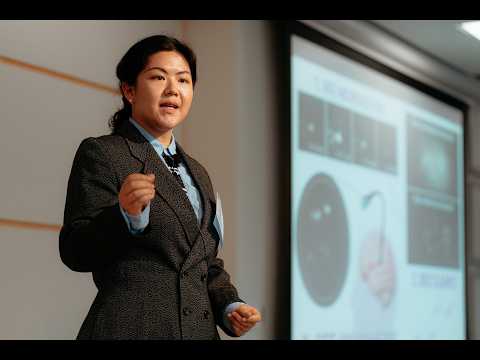
This research develops advanced optical imaging technology to observe neurons firing in real time throughout the brain. By combining high-speed microscopy with flexible fibre-optic image relays, the system overcomes the challenge of light scattering, enabling clearer recordings of neural activity and deeper insights into brain function.
This research examines whether air pollution affects risk-taking behaviour. Using survey data from 40,000 Indonesians and satellite pollution measurements, it shows that higher pollution levels make people more risk-averse. Because risk preferences influence education, careers, entrepreneurship, and innovation, cleaner air may improve both health outcomes and economic decision-making.
2026
This research investigates how reliance on AI systems affects human cognition and reasoning. Using concepts from cognitive offloading, the study compares AI-assisted and independent problem solving, measuring verification behavior, reasoning depth, and decision confidence. The work explores whether increasingly capable AI tools may unintentionally reduce critical thinking and human expertise.
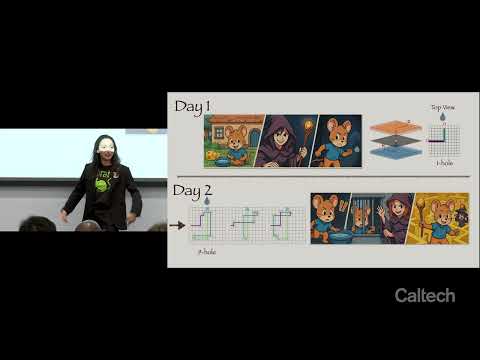
This research uses the Manhattan maze to study rapid learning and memory in mice. The study demonstrates that mice can acquire complex navigation sequences after only a few rewards, retain memories overnight, and generalize learned strategies to new mazes. The findings provide insights into few-shot learning, memory formation, and adaptive intelligence.

2026
This research investigates the role of force feedback in virtual reality training. By comparing users with and without haptic feedback, it examines effects on brain activity, skill acquisition, and real-world performance. The study aims to improve VR training systems by incorporating sensory input essential for effective motor learning and skill transfer.