This research investigates how people strategically spread gossip by reasoning about social networks. Through laboratory experiments and real-world friendship networks, it shows that individuals balance social distance and popularity to maximize information spread while minimizing personal risk, revealing sophisticated cognitive mechanisms that support human communication and social intelligence.

This research investigates how emotions contribute to financial panic using controlled laboratory stock market experiments. By combining sentiment analysis, facial expression recognition, and personality profiling, it aims to identify the emotional drivers of irrational selling behaviour and provide evidence for policies that promote greater financial market stability.

This research investigates how the brain makes decisions under uncertainty by studying mice navigating reward-based mazes. Rather than relying on memorisation, mice continually update mental models through active exploration. These findings improve our understanding of anxiety disorders and may inspire more adaptive artificial intelligence systems.

This research explores how heterogeneous AI agents can establish common ground during collaboration. By separating communication and action into distinct decision-making policies, agents can engage in micro-conversations that create shared understanding. The work aims to improve teamwork among diverse robots and support future human-AI collaboration in complex environments.

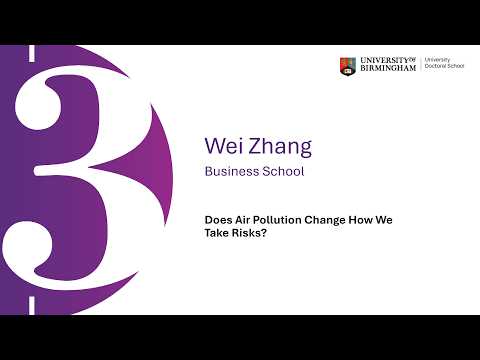
This research examines whether air pollution affects risk-taking behaviour. Using survey data from 40,000 Indonesians and satellite pollution measurements, it shows that higher pollution levels make people more risk-averse. Because risk preferences influence education, careers, entrepreneurship, and innovation, cleaner air may improve both health outcomes and economic decision-making.

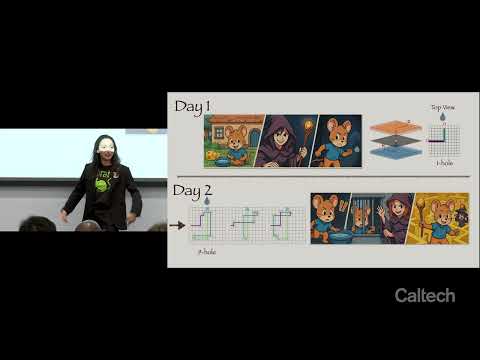
This research uses the Manhattan maze to study rapid learning and memory in mice. The study demonstrates that mice can acquire complex navigation sequences after only a few rewards, retain memories overnight, and generalize learned strategies to new mazes. The findings provide insights into few-shot learning, memory formation, and adaptive intelligence.

This research examines how leadership behavior influences high-stakes decision-making in maritime operations. It highlights how human factors under pressure shape risk perception and outcomes, often more than technical systems. The study proposes a behavior-based decision framework to improve safety, efficiency, and cost-effectiveness in complex, high-risk environments at sea.