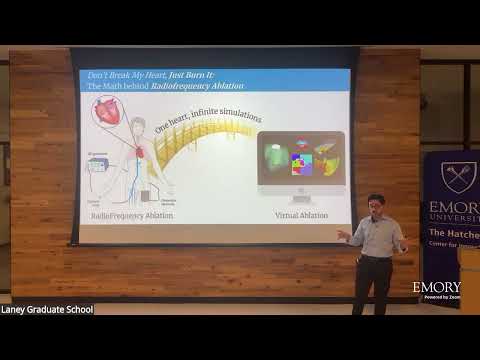
This research develops patient-specific digital twins of the heart to improve radiofrequency ablation for cardiac arrhythmias. By simulating heat transfer, tissue damage, and electrical activity, these computational models could improve treatment accuracy, reduce repeat procedures, accelerate medical device development, and advance the future of personalised cardiovascular medicine.
2026
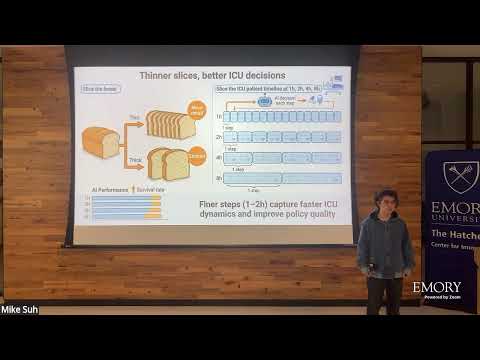
This research investigates how the choice of time interval affects reinforcement learning models for sepsis treatment in intensive care. By comparing one-, two-, four-, and eight-hour patient timelines, it demonstrates that shorter intervals better capture patient dynamics, improve estimated survival outcomes, and may enable more effective AI-assisted clinical decision-making.
2026
This research examines stroke risk in sickle cell disease by modelling blood flow in the Circle of Willis. While ultrasound predicts risk in children, it fails in adults. Using MRI-based, patient-specific simulations, the study identifies major differences in blood flow patterns, offering a non-invasive, more reliable method for adult stroke prediction.