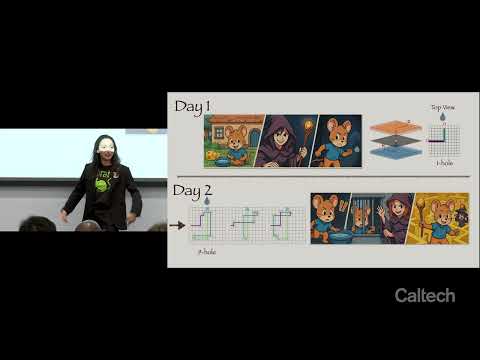
This research investigates how the brain makes decisions under uncertainty by studying mice navigating reward-based mazes. Rather than relying on memorisation, mice continually update mental models through active exploration. These findings improve our understanding of anxiety disorders and may inspire more adaptive artificial intelligence systems.

This research explores how generative AI can create personalized reading materials based on autistic children’s special interests. Using AI-generated stories tailored to individual passions, the study examines effects on engagement and story retelling, suggesting that personalized, strength-based educational tools may improve reading experiences and accessibility for neurodivergent learners.
This research uses the Manhattan maze to study rapid learning and memory in mice. The study demonstrates that mice can acquire complex navigation sequences after only a few rewards, retain memories overnight, and generalize learned strategies to new mazes. The findings provide insights into few-shot learning, memory formation, and adaptive intelligence.