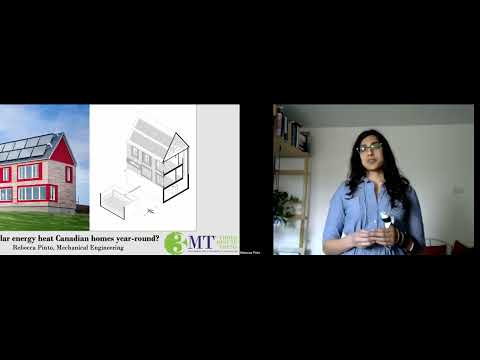
This research explores using solar energy to heat Canadian homes year-round by storing summer heat for winter use. A novel system uses a sand-based thermal battery beneath a house to retain heat. The work aims to reduce fossil fuel dependence and cut emissions from residential heating, a major contributor to Canada’s greenhouse gases.


This research examines how hydropeaking dams cause fish stranding due to rapid flow changes. Using camera monitoring and modeling, it identifies environmental factors like substrate type and seasonal fish abundance that increase risk. The work highlights the need to balance renewable energy production with ecological sustainability in freshwater systems.

This research uses a traffic analogy to explain gas transport challenges in carbon dioxide electrolysis devices. Despite identical porosity, microstructural connectivity determines performance under flooding conditions. Computational modelling reveals how pathway structure affects efficiency, guiding design improvements that enhance CO₂ conversion into fuels and chemicals, supporting scalable and cleaner energy technologies.