This research investigates whether replacing meat with fish could improve nutrition while supporting more sustainable diets. Modelling UK and Irish dietary data found that replacing even 25% of meat increased intake of key nutrients, including vitamin D, omega-3, selenium, and iodine, suggesting simple dietary swaps could benefit health and sustainability.
This research investigates the diversity and behaviour of zooplankton around Rangitāhua, Aotearoa New Zealand. By combining microscopy and underwater acoustics, it identifies species and tracks their daily vertical migrations. The findings will improve understanding of marine ecosystems, climate change impacts, and support Ngāti Kuri's stewardship of this culturally significant region.
This research investigates how landslides disrupt New Zealand's road network. By analysing past landslides, linking landslide severity to road impacts, and combining these relationships with landslide forecasts, the project aims to predict future road closures, improve emergency planning, reduce community isolation, and enhance public safety during severe weather and earthquakes.
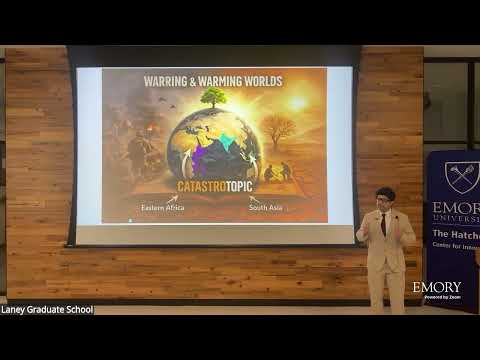
This dissertation examines contemporary literature from South Asia and Eastern Africa to explore how narratives of war and climate crisis reshape our understanding of survival, care, and belonging. Introducing the concept of the catastrophopic, it argues that Global South literature offers powerful frameworks for ecological responsibility and collective world-making.
2026
This research develops atomically thin graphene filters that selectively capture carbon dioxide from industrial gases. By creating precisely sized pores using light and a reactive chemical, the process works at room temperature, is 300 times faster than conventional methods, and could enable production of large filters for industrial carbon capture.
This research uses LiDAR and individual tree segmentation to replace traditional polygon-based forest inventories with precise, tree-level data. By modelling the growth and interactions of individual trees, it enables more accurate forest management, improving timber planning, ecosystem resilience, and climate adaptation while supporting sustainable forestry across British Columbia.
This research investigates how coccolithophores—microscopic marine algae that both absorb and release carbon dioxide—have influenced Earth's carbon cycle over the past three million years. Using fossil sediments, geochemistry, and machine learning, it reconstructs past ocean ecosystems to improve predictions of how marine carbon cycling will respond to future climate change.
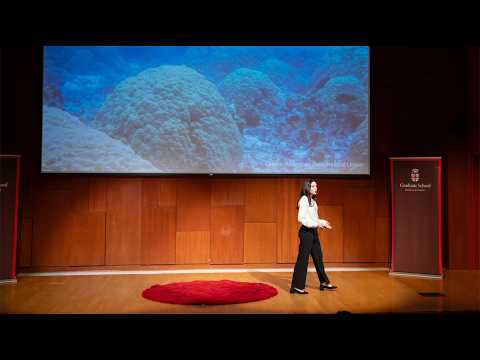
This research reconstructs 200 years of El Niño–Southern Oscillation (ENSO) variability using oxygen isotope records preserved in corals from Christmas Island. By combining coral archives, modern ocean observations, and climate models, it improves understanding of how ENSO is responding to anthropogenic climate change and enhances predictions of future climate extremes.

This research improves flood prediction by analysing data from more than 3,000 rivers worldwide and using local fitting techniques to compare similar weather events. By relying on relevant historical data rather than human intuition, the model aims to produce more accurate flood forecasts and strengthen disaster preparedness under climate change.
2025
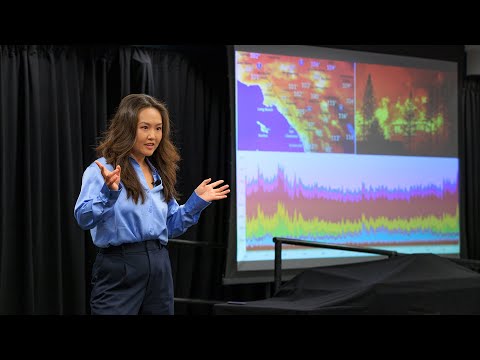
This research uses functional regression to forecast how climate change will affect electricity demand across California. By modeling complete demand patterns rather than isolated data points, it aims to help design smarter, more resilient, and more equitable power grids that reduce outages during increasingly frequent heatwaves and extreme weather.