
This research develops electrostatic artificial muscles for underwater robots inspired by the movement of fish and sharks. Unlike noisy propeller-driven systems, these soft actuators enable quieter, more efficient swimming that minimises disturbance to marine ecosystems, offering a promising alternative for environmental monitoring, reef surveys, and underwater infrastructure inspection.

This research investigates the diversity and behaviour of zooplankton around Rangitāhua, Aotearoa New Zealand. By combining microscopy and underwater acoustics, it identifies species and tracks their daily vertical migrations. The findings will improve understanding of marine ecosystems, climate change impacts, and support Ngāti Kuri's stewardship of this culturally significant region.
2026
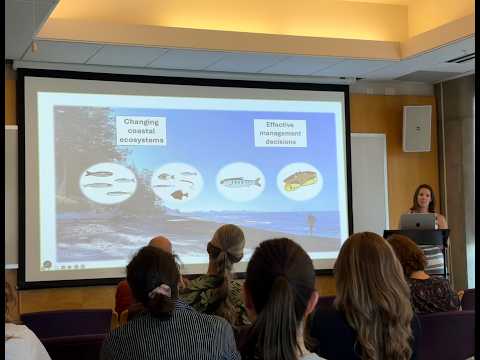
Emily examines how shoreline modification affects coastal fish and crab management in Puget Sound. Her first two chapters show that fish responses to shoreline armor are weak, species-specific, and dependent on spatial scale and life history, while functional diversity differs more among sites than shoreline types. A literature review finds limited direct evidence linking nearshore habitat features to juvenile Chinook salmon growth and survival, except for depth and overwater structures. Her final chapter models Dungeness crab management under illegal harvest, handling mortality, and lost gear, revealing greatest sensitivity to threats removing legal-sized males and highlighting trade-offs among management strategies overall.

2026
This research examines how different sea turtle species uniquely shape marine ecosystems through their feeding behaviors. Studying green, loggerhead, and Kemp’s ridley turtles along Florida’s Gulf Coast, the work reveals species-specific ecological functions involving seagrass grazing, sediment mixing, and food web interactions that contribute to ecosystem resilience and coastal conservation.
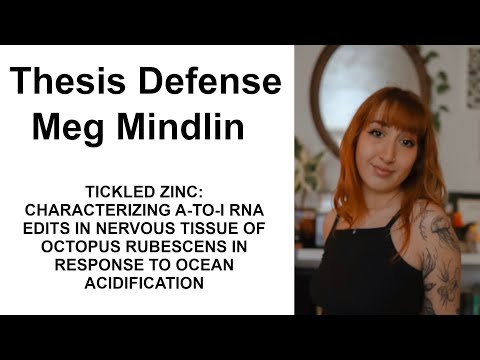
This thesis examines how octopuses respond to climate change at a molecular level, focusing on ocean acidification and RNA editing. Rising temperatures harm octopus reproduction, growth, and survival, while acidification produces mixed effects—some species show stress, yet others demonstrate resilience. Cephalopods overall appear more tolerant of acidification than fish, raising questions about the mechanisms behind this adaptability. Thousands of acidification-responsive edits disproportionately affect C2H2 zinc finger regulators, altering predicted binding targets, including nuclear pore components implicated in stress responses.

My research tracks the movements of understudied South African ray species using acoustic transmitters and a nationwide receiver network. Early findings reveal key habitats, including Algoa Bay, and annual west-to-east migrations. Mapping ray movements fills crucial ecological knowledge gaps, guiding conservation and management strategies for species at risk of extinction.