
This research investigates the safety of hydrogen vehicles and refuelling infrastructure using advanced computer simulations of fires and explosions. Findings suggest protective barriers can reduce blast pressures by 60–90%. The work provides evidence for future safety standards, helping enable wider adoption of hydrogen transportation while protecting people, property, and communities.

This research develops a co-design optimization framework for microgrids that simultaneously designs physical infrastructure and control systems. By improving both reliability and cost-effectiveness, it enables more resilient renewable energy networks, supports upgrades to existing microgrids, and helps communities maintain electricity during extreme weather events and grid failures.

This research develops a seawater-compatible electrolyzer that uses state-of-the-art materials with an integrated deionization layer powered by waste heat. The system enables efficient hydrogen production from seawater, supporting portable refueling stations for hydrogen-powered marine UAVs and advancing clean, sustainable energy for offshore operations.

2025
This research develops intelligent polymer membranes that selectively capture carbon dioxide using molecular simulations to design highly efficient gas-separation materials. By improving carbon capture at industrial sources, the technology could reduce greenhouse gas emissions, support cleaner energy systems, and contribute to tackling one of the world's greatest challenges: climate change.

This research explores tidal energy as a reliable renewable source using digital twin technology. By simulating tidal farms in the Long Island Sound, it evaluates performance and environmental impacts before construction. The approach enables efficient, fish-friendly energy design, offering a scalable solution for sustainable ocean-based power generation worldwide.

This research develops sustainable solid biofuels using organic waste instead of food crops. By recycling water and catalysts in a high-temperature process, it reduces energy consumption and improves fuel quality. The work addresses key challenges of feedstock and efficiency, advancing environmentally friendly alternatives for heating, power generation, and industry.

This research uses a traffic analogy to explain gas transport challenges in carbon dioxide electrolysis devices. Despite identical porosity, microstructural connectivity determines performance under flooding conditions. Computational modelling reveals how pathway structure affects efficiency, guiding design improvements that enhance CO₂ conversion into fuels and chemicals, supporting scalable and cleaner energy technologies.

This research investigates carbonatite rocks to understand how critical minerals like rare earth elements form and concentrate. Using radiometric dating and high-resolution imaging, it reconstructs their geological history. This enables more precise exploration, helping Canada locate vital resources needed for clean energy technologies and modern infrastructure while reducing reliance on guesswork.

This research improves electric resistance welding by modelling heat transfer and weld formation physics. By identifying and controlling the weld point location, it replaces trial-and-error with predictive engineering rules. The work enables stronger, safer pipelines, supporting the adoption of advanced materials needed for reliable infrastructure in a clean energy future.
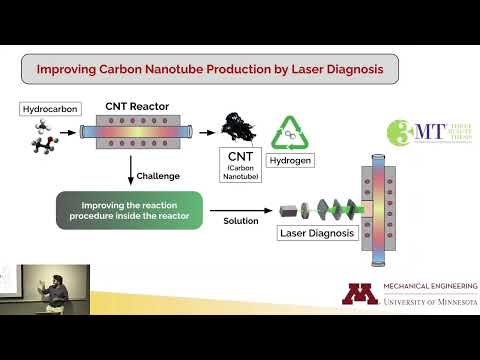
Hydrocarbons drive modern society but fuel climate change when burned. This research converts hydrocarbons into carbon nanotubes and clean hydrogen instead. Using laser diagnostics to probe reactors, it reveals how nanotubes form, enabling higher production rates, industrial decarbonization, and advanced materials for a sustainable, low-carbon energy future.