
This research develops a co-design optimization framework for microgrids that simultaneously designs physical infrastructure and control systems. By improving both reliability and cost-effectiveness, it enables more resilient renewable energy networks, supports upgrades to existing microgrids, and helps communities maintain electricity during extreme weather events and grid failures.
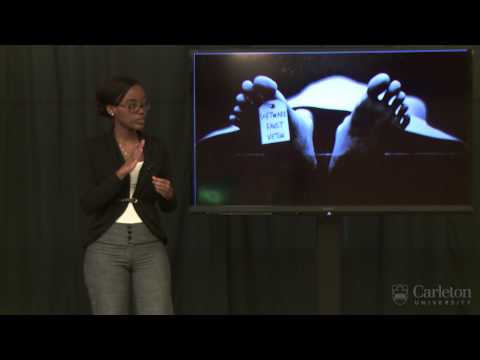
This research focuses on improving the safety of software in critical systems like cars, medical devices, and aircraft. By combining mathematical verification with modeling and simulation, it aims to detect faults before deployment. The goal is to prevent catastrophic failures and ensure that life-critical technologies can be trusted.
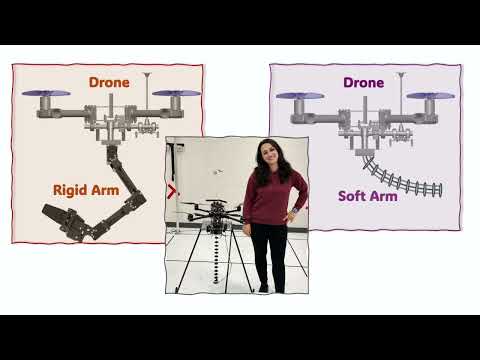
This research develops drones with soft robotic arms capable of safely grasping and transporting objects in challenging environments. By combining predictive modelling with visual feedback, it overcomes control challenges associated with soft materials. The work advances intelligent, adaptive aerial robotics for applications such as emergency delivery and hazardous environments.
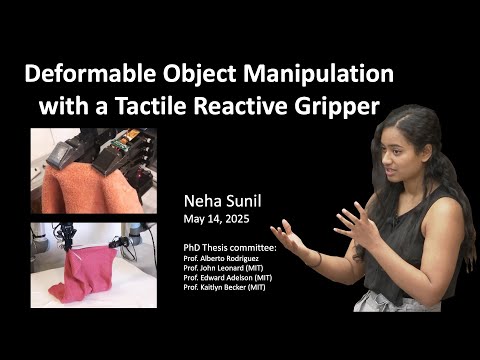
2025
This research presents a modular visuotactile robotic system for manipulating deformable objects such as cables, towels, and garments. Unlike rigid-object manipulation, deformables pose challenges due to occlusion, complex dynamics, and high variability. The system combines vision for global context and tactile sensing (GelSight) for precise local control, enabling tasks like cable tracing, cloth edge following, towel folding, and garment handling. It uses reactive control, learned dynamics (LQR), affordance models, and dense correspondence to generalise across tasks and objects. A key innovation is shifting from global state estimation to local, feedback-driven manipulation, improving robustness, efficiency, and real-world applicability in domains like manufacturing, healthcare, and assistive robotics.