
This research explores biofiltration as a sustainable alternative to chemical water treatment. By supplying bacteria with nutrients like nitrogen and phosphorus, it improves removal of harmful organic matter. Results show a 20% efficiency increase, reducing chemical use and risks, and offering a cost-effective solution for safe drinking water worldwide.
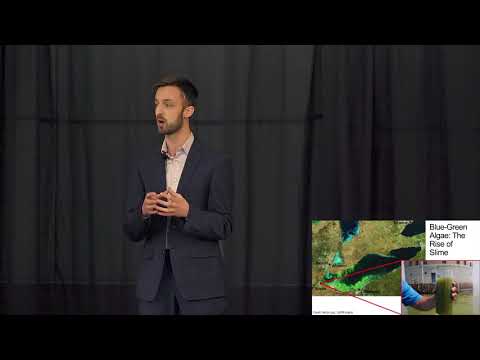
This research tackles harmful cyanobacteria blooms that threaten drinking water. Using ceramic membrane filtration, it prevents toxin release by retaining intact cells. Improved cleaning methods with eco-friendly chemicals enhance membrane efficiency and longevity. The work aims to ensure safe water treatment as climate change increases the frequency and severity of algal blooms.
2026
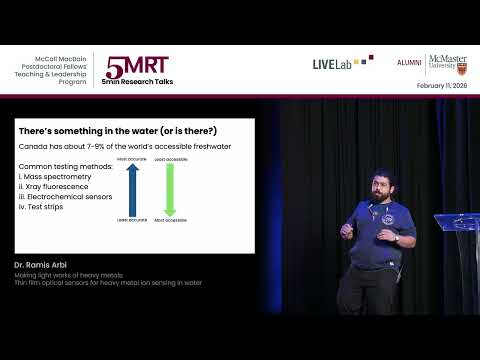
Heavy metals in drinking water pose serious health risks, yet current testing methods often require laboratories or lack accuracy. This research develops optical sensors called optodes that use light-responsive dyes to detect contaminants. The goal is a portable, real-time device capable of accurately measuring heavy metals like lead in water.

2025
Over 11 million U.S. homes rely on toxic lead pipes. Bioderived polyethylene offers a safer replacement, but long-term durability must be ensured. This research studies how chlorine degrades pipe materials and how molecular branching improves resilience. Accelerated aging tests link polymer structure to performance, guiding design of longer-lasting, reliable water infrastructure.
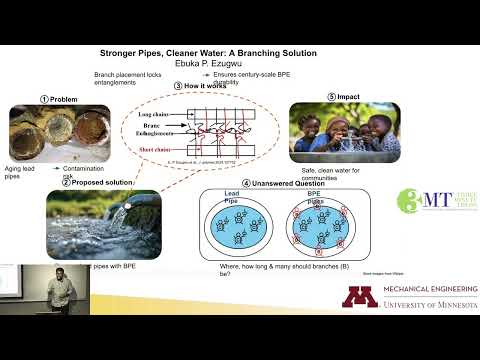
Millions of U.S. homes still rely on lead pipes, prompting a shift toward bimodal polyethylene replacements. This research examines how molecular branching affects pipe durability under chlorinated conditions. Using accelerated aging tests, it links polymer structure to long-term performance, guiding the design of safer, longer-lasting water pipes for future infrastructure.

Lead contamination in drinking water threatens millions. This research combines physics-based pipe models with machine learning to identify lead pipes using vibration data. Generating thousands of simulated signals enabled a classifier with 99% accuracy, offering a noninvasive, cost-effective method to locate hidden lead pipes and support safer water infrastructure worldwide.