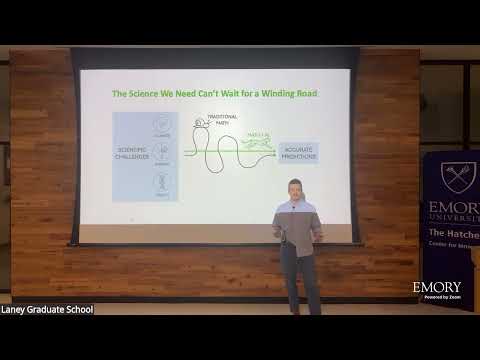
This research uses artificial intelligence to accelerate scientific simulations by learning patterns from traditional mathematical models. Rather than replacing physics, the AI predicts efficient starting points for complex calculations, producing accurate results much faster. The approach could dramatically speed up research in fields such as medicine, engineering, and climate science.
2026
This research has developed an electronic nose that combines gas sensors with machine learning to detect food spoilage and hidden allergens. By recognizing unique scent signatures more accurately than the human nose, the technology could improve food safety, prevent allergic reactions, reduce food waste, and eventually be integrated into everyday devices.