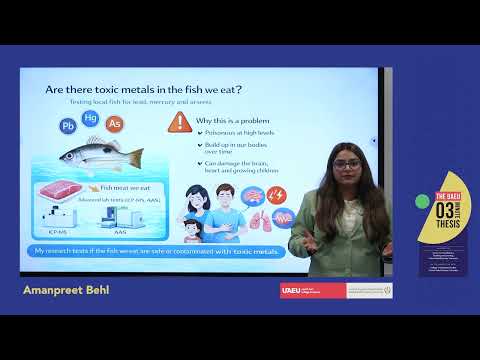
This research investigates heavy metal contamination in fish from the Arabian Gulf. Using advanced laboratory techniques, trace elements such as arsenic, lead, and mercury are measured in edible tissues to assess food safety and determine whether local fish consumption poses risks to human health.
Urban farms in Baltimore need reliable irrigation water. This research tested harvested rainwater for E. coli, Listeria, and Salmonella, and evaluated two treatments: sand–iron filtration and peracetic acid sanitizing. Both reduced E. coli, and sanitizing eliminated Listeria. Produce remained contamination-free, suggesting treated rainwater is a viable supplemental irrigation source.
This research develops protein-based forensic tools to detect meat adulteration in processed foods. By designing species-specific protein biomarkers and using mass spectrometry, the method identifies hidden pork, beef, chicken, or lamb in mixed meat products. The approach supports food safety, religious dietary compliance, allergy protection, and government efforts to combat food fraud.
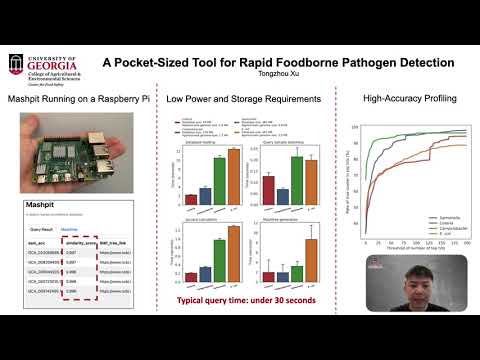
Mashpit is a portable genome-search tool that runs on a Raspberry Pi, enabling rapid, offline screening of Salmonella genomes. Using MinHash sketches, it scans hundreds of thousands of genomes in seconds, offering small or low-resource labs a fast, accessible way to identify related isolates before performing high-resolution follow-up analyses.