This research investigates how misfolded Islet Amyloid Polypeptide (IAPP), a protein associated with Type 2 diabetes, affects blood clot formation. Laboratory experiments showed that misfolded IAPP creates unusually dense and resilient clots. These findings may help explain elevated cardiovascular risk in diabetes and identify new targets for preventing heart attacks and strokes.

This research investigates the genetic mechanisms underlying polycystic ovary syndrome (PCOS), a condition affecting one in ten women and the leading cause of female infertility. By studying thousands of genetic variants across multiple cell types, the project aims to identify the biological causes of PCOS and develop targeted treatments.

This research investigates macrophages, immune cells that regulate infection, tissue repair, and cancer responses. Through laboratory experiments and machine-learning models, it aims to predict macrophage function across different diseases and patients. The work could improve prognosis, guide treatments, evaluate drug safety, and forecast recovery following major illnesses and injuries.

This research improves fluorescent imaging by enhancing the brightness of long-wavelength dyes. By encapsulating flexible squaraine dyes within macrocyclic rings, molecular motion is restricted, reducing energy loss and increasing light emission. The result is brighter, clearer imaging, enabling better visualization of biological structures such as cells and cancer tissue.

This research uses nematode worms and machine learning to quantify changes in neuron structure linked to neurodegenerative diseases. By replacing subjective visual analysis with objective computational methods, it identifies structural abnormalities and improves understanding of disease mechanisms, supporting future advances in diagnosis and treatment.

This research uses spatial transcriptomics to map interactions between T cells, cancer cells, and immunosuppressive cells in tumours. Findings suggest cancer suppresses immune responses by surrounding and weakening T cells. The work aims to improve immunotherapy and enable personalised cancer treatment through detailed tumour mapping.


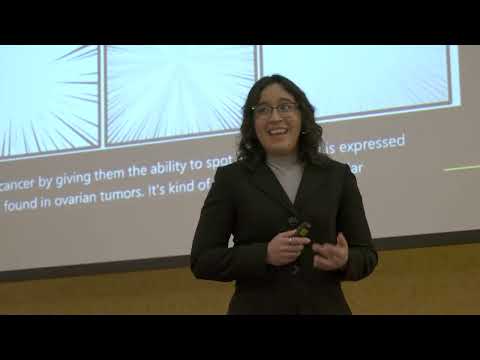
This research engineers immune T cells to better fight ovarian cancer. By modifying them to recognize tumor-specific proteins and resist cancer’s suppressive signals, the project strengthens the body’s natural defenses. The goal is to improve immunotherapy effectiveness, overcome tumor resistance, and increase survival rates for women facing this deadly disease.

Mitochondria are known as the cell’s powerhouses, but new research shows they also guide cell movement. Using advanced imaging, this work reveals how mitochondria control direction and speed of migrating cells. Understanding this process may explain wound healing and how cancer cells spread throughout the body.