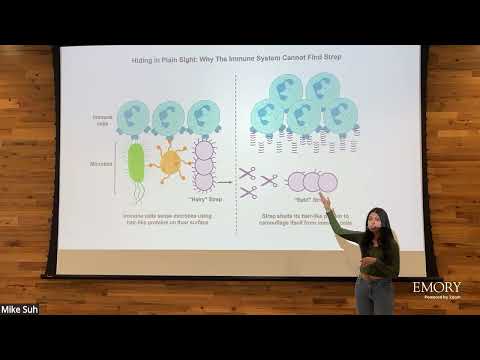
This research reveals how Streptococcus evades immune attack by shedding its hair-like surface proteins, distracting immune cells while provoking excessive immune activation. The findings provide a new explanation for how recurrent strep infections can trigger autoimmune diseases and suggest treatments should target both the bacteria and the immune response.

This research shows that disrupting the circadian clock in gut cells increases susceptibility to obesity. Experiments in mice reveal that misaligned internal clocks impair metabolic regulation, leading to greater fat accumulation. The findings highlight that meal timing is as important as diet composition and suggest circadian clocks as therapeutic targets.

Cleft lip formation may result from broken DNA enhancers—switches that control facial development genes. Scanning the genomes of 130 African children with clefts, this research identified harmful enhancer variants and confirmed their effects in mouse models. The disrupted enhancer likely regulates BMP2, offering new insight into cleft biology and future prevention.

2022
This research tests whether psychedelics improve adaptability in mice. After learning reward rules, mice with a single psychedelic treatment relearned new rules faster and used more information—learning not only from rewards but also from missed rewards. The findings suggest psychedelics enhance behavioral flexibility, offering clues for developing future mental health treatments.

2024
This research tests whether positive, therapy-induced epigenetic changes can be inherited. Using mice with genetic eye disease, the team applies a successful treatment, checks for vision improvement, examines resulting DNA chemical marks, and studies whether offspring inherit these beneficial modifications. Findings could reshape our understanding of therapy and generational health impact.

This research investigates how T cells influence microglial behavior in Alzheimer’s disease. Using a mouse model, the study found that removing T cells did not alter amyloid-beta plaques but unexpectedly led to healthier microglial activity and reduced myelin damage. The findings suggest T cells may worsen neurodegeneration and reveal new therapeutic avenues.