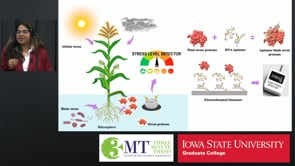
Corn crops often suffer hidden stress long before visible damage appears. This research develops DNA aptamer-based biosensors that detect early stress signals in maize soil. By providing real-time alerts, the system enables faster intervention, improving crop resilience, farm productivity, and long-term food security.
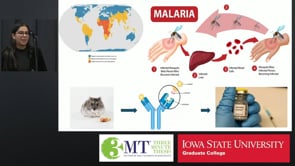
Malaria infects hundreds of millions each year by using the parasite Plasmodium to invade the liver through the CSP protein. This research designs tightly binding antibodies to block infection at its earliest stage, improving vaccine effectiveness and offering a path toward preventing malaria before symptoms begin.
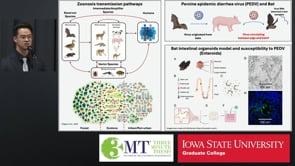
This study uses bat intestinal organoids to determine whether bats are truly infected with porcine epidemic diarrhea virus. The results confirm active infection, validating field surveys and introducing organoids as a powerful tool for studying zoonotic virus transmission and preventing future spillover events.

Low-grade serous ovarian cancer frequently returns after standard treatment, and current targeted drugs eventually stop working. This research investigates why cancer cells become resistant, comparing them to prey that adapt to evade a predator. By treating patient-derived tumor cells with inhibitors and analyzing the genes activated in the resistant survivors, the research aims to uncover the mechanisms behind drug resistance and guide development of more effective therapies.

Craniosynostosis occurs when skull sutures fuse too early, requiring risky surgeries. The researcher identified microRNA-200A as a key regulator of suture development. In mice lacking miR-200A, sutures fused prematurely, but adding extra miR-200A via gene therapy prevented fusion entirely. This breakthrough suggests a non-surgical future treatment for craniosynostosis.

Chronic diseases exhaust the body’s CD8 T cells, weakening their ability to fight infections and cancer. This research identifies CD7 as a key driver of T-cell exhaustion. Removing CD7 keeps T cells active, boosts cytokine production, and improves control of tumors and viruses—offering a promising new immunotherapy target.

Iowa’s prairies are nearly gone, but restored prairies may cool local climates through evaporative cooling. Deep-rooted, structurally diverse plants increase water transfer to the atmosphere, reducing surface and air temperatures. Using drones, LiDAR, and flux towers, the researcher quantifies prairie cooling as a climate-mitigation tool.

The Mississippi River relies on dams for commercial navigation, but these structures block fish migration and damage ecosystems and local fishing economies. This research uses hydrodynamic modelling to test fish-passage designs, such as bypass channels, showing how they can reconnect habitats, support biodiversity, and allow economic and ecological goals to coexist.

Migraine affects over 10% of people and disproportionately impacts women. This research studies sex differences in brain circuits using mouse models to understand why. By manipulating neural pathways, findings show certain circuits trigger migraine-like sensitivity only in females. Mapping these circuits may enable personalized, more effective migraine treatments.

PCBs, toxic “forever chemicals” found in older school buildings, accumulate in body fat and trigger harmful inflammation. This research shows that PCB-exposed fat cells recruit excessive immune cells, creating an uncontrolled inflammatory response that contributes to obesity and diabetes. Understanding this mechanism opens pathways for treatments targeting fat–immune cell communication.