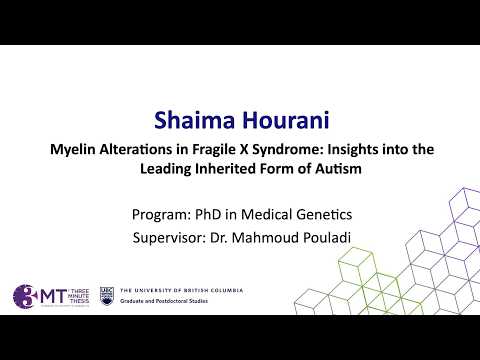
This research investigates the role of oligodendrocytes in Fragile X syndrome, revealing delayed cell maturation and disrupted myelin development. Using human stem cell and mouse models, it identifies these overlooked cells as promising therapeutic targets, potentially enabling earlier and more effective treatments for Fragile X and related neurodevelopmental disorders.
Myelin enables efficient communication between nerve cells and is essential for cognition, movement, and sensation. In neurodegenerative diseases, myelin is lost, impairing daily life. This research uses stem cells, gene profiling, and gene editing to uncover why myelin fails—and how regenerating it could transform treatment.

My research investigates AU403, a novel LXR agonist, as a potential treatment for frontotemporal dementia. Using mouse brain slice models, the study shows that AU403 restores damaged myelin, improves neuronal communication, and reverses disease-like symptoms, offering hope for a condition with no approved therapies.