This research develops hybrid lipo-polymeric nanoparticles that overcome major limitations of current mRNA vaccine technology. The particles can be freeze-dried, rapidly loaded with mRNA, and simultaneously deliver therapeutic drugs. Their flexibility improves vaccine storage and distribution while enabling powerful combination therapies, including enhanced cancer treatments with improved survival in preclinical models.
This research develops microscopic copper wire "bridges" that improve heat transfer between computer chips and cooling systems. By reducing chip temperatures by around 3°C, the technology can lower data centre cooling energy by approximately 10%, improving efficiency and supporting more sustainable AI infrastructure.
This research developed NanoX, a nanoscale fluorescent sensor that images oxytocin release from individual neurons in real time. By revealing patterns of brain chemistry associated with mental health disorders, the technology could enable earlier diagnosis, improve understanding of neurochemical signaling, and support both preventive and personalized mental healthcare.
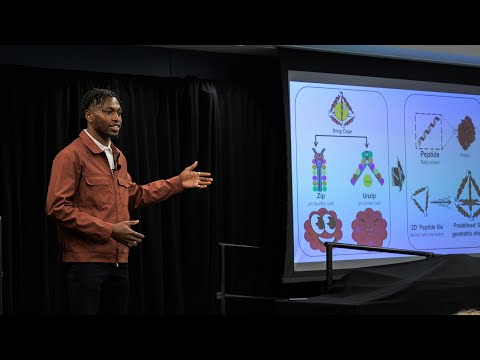
This research engineers peptide-based "drug cages" that assemble like molecular zippers to deliver medicines only at their intended target. Inspired by natural protein structures, these programmable nanostructures could dramatically reduce chemotherapy side effects by releasing drugs precisely where needed, improving treatment effectiveness while protecting healthy tissues.
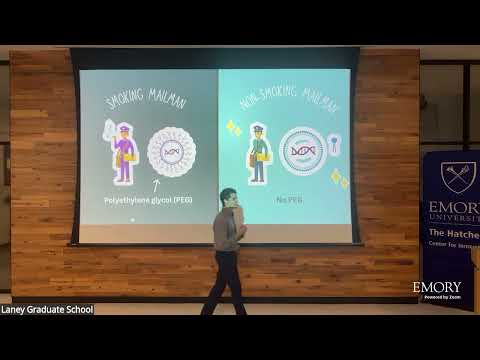
This research develops targeted lipid nanoparticle delivery systems to improve tuberculosis treatment and vaccination. By replacing PEG coatings and using mannose to target infected macrophages, it aims to deliver drugs more effectively, reduce treatment duration, improve vaccine performance, and contribute to the global elimination of tuberculosis.
This research develops innovative three-dimensional "daisy" particle structures to improve inhaled medicines. Using Isothermal Dry Particle Coating, it prevents fine drug particles from clumping, ensuring they reach the lungs effectively. The work aims to improve inhaler performance and treatment for the 300 million people worldwide living with respiratory diseases.
This research develops gold nanoparticles coated with peptides to block DNA repair in colorectal cancer cells, helping overcome drug resistance. Laboratory studies show the treatment dramatically reduces cancer cell survival after radiation while minimising toxicity. The approach could provide a safer, more effective therapy for colorectal cancer and other drug-resistant cancers.
This research develops brain-inspired computer chips using memristors, devices that can store and process information simultaneously like biological synapses. By enabling in-memory computing, the technology reduces energy consumption while supporting applications such as autonomous robots and image processing. The work advances efficient hardware for future artificial intelligence systems.
This research investigates how the shape, size, and surface chemistry of carbon nanomaterials influence their ability to remove contaminants from complex wastewater. By systematically testing nanomaterial variations against pollutants such as microplastics and petroleum derivatives, it aims to establish design rules that enable more effective, real-world water treatment technologies.
This research develops nanobubble-enhanced ultrasound imaging as an accessible alternative to MRI for cancer diagnosis. Tiny gas-filled nanoparticles amplify ultrasound signals and improve image quality, particularly in prostate cancer. The technology could reduce diagnostic delays, lower costs, and provide high-quality medical imaging to more patients worldwide.
Pagination
- Page 1
- Next page