
This research improves flood prediction by analysing data from more than 3,000 rivers worldwide and using local fitting techniques to compare similar weather events. By relying on relevant historical data rather than human intuition, the model aims to produce more accurate flood forecasts and strengthen disaster preparedness under climate change.
2025
This research investigates how the alga Epithemia sustains productivity in California's Eel River by fixing atmospheric nitrogen. Using stable isotope analysis, it shows that Epithemia supplies almost all the nitrogen supporting algal growth, revealing a critical ecological process underpinning river food webs and the conservation of salmon ecosystems.
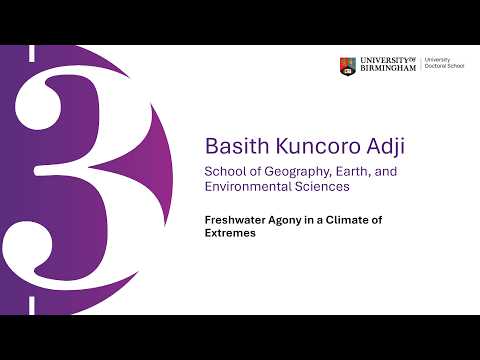
This research investigates how freshwater organisms respond to climate extremes such as warming rivers and drought. Using field surveys, experiments, and modelling, it examines whether species can adapt to higher temperatures and what costs that adaptation may carry. Understanding these limits is crucial for protecting ecosystems, water security, and biodiversity.
2026
This research investigates tropical atmospheric waves that influence rainfall, storms, and seasonal weather patterns. Using satellite observations and machine learning, the study shows that wave propagation depends on geographic location, upper-level winds, and topography. The findings can improve weather forecasting models and help communities better prepare for extreme rainfall events.

2026
This research investigates how the shape, size, and surface chemistry of carbon nanomaterials influence their ability to remove contaminants from complex wastewater. By systematically testing nanomaterial variations against pollutants such as microplastics and petroleum derivatives, it aims to establish design rules that enable more effective, real-world water treatment technologies.
2026
This research uses freshwater mussels as bioindicators to investigate water quality in Darby Creek. Community science data revealed links between elevated chloride pollution, likely from road salt, and declining mussel populations. The discovery of a healthy mussel population highlights both the importance of local monitoring and opportunities for targeted watershed restoration.
2026
This research develops adaptable machine learning methods for wildlife monitoring using camera trap images. By clustering visually similar animal images, the system dramatically reduces the amount of manual labeling required while maintaining accuracy. The approach could enable faster, large-scale biodiversity monitoring critical for protecting endangered species worldwide.
2026
This research examines how different sea turtle species uniquely shape marine ecosystems through their feeding behaviors. Studying green, loggerhead, and Kemp’s ridley turtles along Florida’s Gulf Coast, the work reveals species-specific ecological functions involving seagrass grazing, sediment mixing, and food web interactions that contribute to ecosystem resilience and coastal conservation.

2026
This research improves weather and climate forecasting by studying how dry air mixes into thunderstorm clouds, a process called entrainment. Using satellite observations, radar data, and interpretable machine learning, the work refines outdated cloud physics models, helping scientists better predict severe weather, hurricanes, and long-term climate behavior.
2026
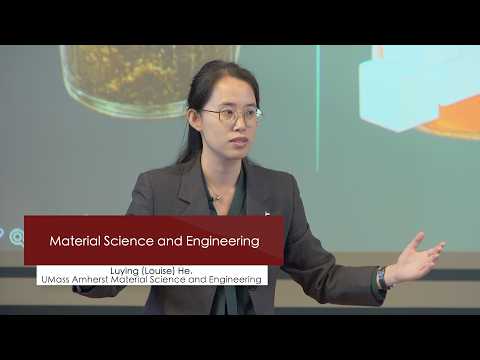
This research develops biodegradable “living” water filters grown from kombucha cellulose membranes. Unlike conventional plastic filters, these biofilters can self-defend against harmful microbes and self-repair when damaged. The work aims to create affordable, sustainable, and effective water filtration systems that reduce plastic waste while improving access to clean drinking water.