This research investigates geometric surfaces with prescribed mean curvature, inspired by the physics of bubbles. By constructing new mathematical surfaces from spheres and unduloids, it explores how curvature changes under motion, providing new insights into differential geometry and the mathematics that precisely describes physical phenomena.
2026
This research investigates why supersonic aircraft engines fail under turbulent atmospheric conditions. Using high-performance supercomputer simulations, the study models airflow disruptions around supersonic engines to identify early warning signs of instability. The work aims to improve engine reliability and help revive safe, efficient supersonic passenger air travel.
2026
This research improves weather and climate forecasting by studying how dry air mixes into thunderstorm clouds, a process called entrainment. Using satellite observations, radar data, and interpretable machine learning, the work refines outdated cloud physics models, helping scientists better predict severe weather, hurricanes, and long-term climate behavior.
2026
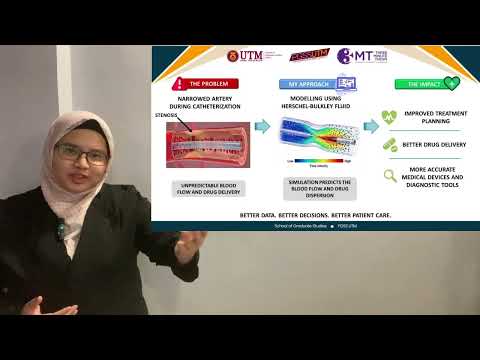
This research models blood flow in narrowed arteries and during catheterization using the Herschel–Bulkley fluid model. By simulating flow and drug dispersion, it identifies factors affecting unpredictability. These insights enable optimized treatments, improved medical device design, and better visualization for clinicians, ultimately enhancing safety and outcomes in cardiovascular care.

This research uses a traffic analogy to explain gas transport challenges in carbon dioxide electrolysis devices. Despite identical porosity, microstructural connectivity determines performance under flooding conditions. Computational modelling reveals how pathway structure affects efficiency, guiding design improvements that enhance CO₂ conversion into fuels and chemicals, supporting scalable and cleaner energy technologies.
2026
Inspired by bird flight, this research investigates how wingtip feathers influence aerodynamics. Using bioinspired design, 3D-printed models, and wind tunnel experiments, it isolates the effects of feather separation, bending, and twisting. These insights improve aircraft stability, lift, and maneuverability, offering pathways to safer and more efficient aviation in turbulent environments.

2025
This research improves aviation efficiency by using tiny vortex generators to control turbulent airflow over airplane wings. These structures reduce drag, save fuel, and cut carbon emissions—potentially eliminating 600,000 tons of CO₂ annually. It's a small aerodynamic change with a massive global impact for greener, more sustainable air travel.