This research develops nanostructured optical devices that dramatically improve camera efficiency by redirecting light rather than discarding unwanted wavelengths. Using nanoscale patterned glass inspired by semiconductor fabrication techniques, the work could produce mobile cameras with significantly better low-light performance, higher image quality, faster imaging, and improved efficiency at ultra-high resolutions.
This research develops photonic integrated circuits that compute using light instead of electrons. By creating integrated all-optical transistors and photonic neural networks, the work advances ultra-fast optical computing systems capable of dramatically outperforming conventional electronic processors in speed, efficiency, and future artificial intelligence applications.
This research develops cavity-based methods for controlling thermal radiation by transforming random heat emission into coherent, directional thermal beams. Unlike traditional narrowband approaches, the technique enables broadband heat control using practical materials such as silicon and germanium, with potential applications in energy efficiency, waste-heat recycling, cooling technologies, and climate mitigation.
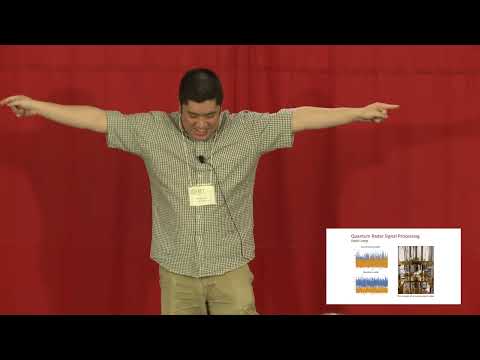
This research explores quantum radar signal processing, using quantum entanglement to improve detection by better separating signal from noise. It demonstrates that quantum radars are experimentally viable and mathematically comparable to conventional systems, with potential advantages. Applications include low-power, safe technologies such as medical imaging and interference-free sensing.
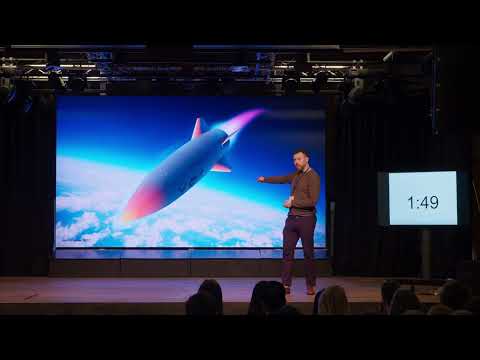
Hypersonic missiles generate plasma that can interfere with radar detection. This research uses open-source, physics-based simulations to model plasma formation efficiently. Results show plasma usually has little effect on radar, but when it does, the method provides industry with a fast, cost-effective way to design improved radar systems for missile detection.

This research improves aviation efficiency by using tiny vortex generators to control turbulent airflow over airplane wings. These structures reduce drag, save fuel, and cut carbon emissions—potentially eliminating 600,000 tons of CO₂ annually. It's a small aerodynamic change with a massive global impact for greener, more sustainable air travel.