This research investigates magnetic reconnection, a fundamental plasma process that drives space weather and can disrupt satellites, GPS, and power grids. Using UCLA's Large Plasma Device, the study recreates reconnection events thousands of times in the laboratory to uncover missing physics and improve predictions of solar storms and space-weather hazards.
This research demonstrates that turbulence in galaxy clusters generates radio halos through synchrotron radiation from cosmic ray electrons. By linking large-scale astrophysical processes to familiar physical principles, it explains the origin of cluster emissions and advances understanding of how galaxy clusters form, merge, and evolve.
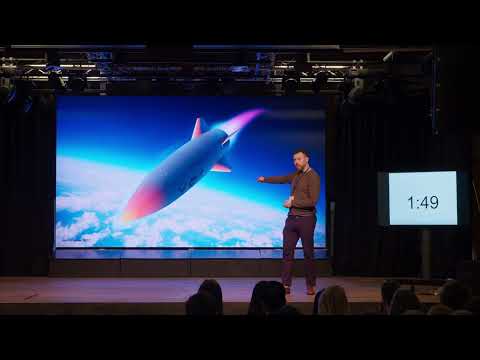
Hypersonic missiles generate plasma that can interfere with radar detection. This research uses open-source, physics-based simulations to model plasma formation efficiently. Results show plasma usually has little effect on radar, but when it does, the method provides industry with a fast, cost-effective way to design improved radar systems for missile detection.
This research uses ultra-powerful lasers to study electrons in near-vacuum conditions, enabling precise measurements of laser intensity and vacuum cleanliness. By tracking electron ejection angles and clearing dynamics, the work supports next-generation experiments in vacuum physics, fusion energy, and radiation science—creating a “laboratory fish tank” for exploring empty space.