This research uses weak gravitational lensing to map the invisible distribution of dark matter within galaxy clusters. By measuring tiny distortions in the shapes of distant galaxies, it reconstructs total mass distributions, helping scientists understand dark matter, galaxy cluster evolution, and the large-scale structure and history of the universe.
This research combines galaxy simulations with machine learning to study the invisible gas surrounding galaxies. By training a neural network to interpret astronomical observations, the project creates a public tool—the Circumgalactic Dictionary—that enables previously impossible measurements, advancing our understanding of galaxy evolution and the origins of stars, planets, and life.
This research investigates white dwarfs and the planetary debris that surrounds them. By developing a technique to detect transiting debris systems, the researcher has expanded the known population of these rare objects, helping astronomers understand how planetary systems evolve, survive, and ultimately break apart after their host stars die.
This research uses artificial intelligence and machine learning to analyze light from distant exoplanets. By interpreting atmospheric spectral signatures, it aims to identify potentially habitable worlds and search for signs of life beyond Earth. The work supports future space missions designed to answer one of humanity’s oldest questions: Are we alone?
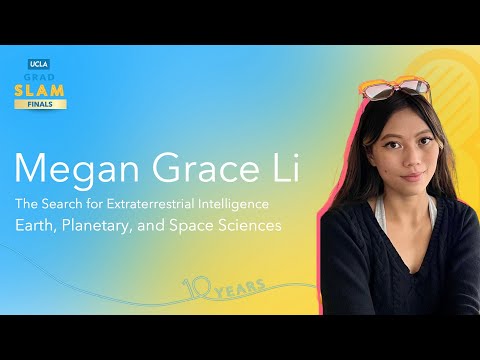
This research uses artificial intelligence and astronomical data to search for signs of extraterrestrial intelligence. By applying anomaly-detection techniques to telescope images, the project identifies unusual signals or patterns that may indicate intelligent activity, with the ultimate goal of detecting and decoding potential messages from civilizations beyond Earth.
This research uses gravitational lensing to investigate dark matter, the invisible substance that makes up roughly 80% of the Universe's matter. By studying distortions in light caused by massive galaxies, it seeks to identify dark matter structures and determine whether dark matter is clumpy, smooth, cold, warm, concentrated, or diffuse.
This research investigates magnetic reconnection, a fundamental plasma process that drives space weather and can disrupt satellites, GPS, and power grids. Using UCLA's Large Plasma Device, the study recreates reconnection events thousands of times in the laboratory to uncover missing physics and improve predictions of solar storms and space-weather hazards.
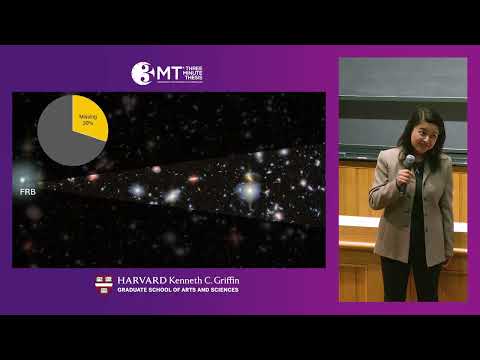
This research investigates the universe’s “missing” ordinary matter using Fast Radio Bursts (FRBs) as cosmic probes. By measuring how FRB signals are delayed while traveling through space, the study reveals that far more matter exists between galaxies than previously estimated, accounting for the long-standing missing baryon problem.
This research examines a rare Martian meteorite containing garnet, a mineral that records geological conditions. Using laser mass spectrometry and microscopy, it investigates how these garnets formed despite Mars lacking plate tectonics. The findings offer insights into planetary evolution and improve understanding of Martian geology and future exploration targets.
This research investigates the tilt of exoplanets to understand their formation and evolution. By developing a new measurement method, it identifies a Uranus-like tilted planet and enables broader study of planetary systems. These insights help reveal climates, histories, and potential habitability of distant worlds beyond our solar system.