
This research uses artificial intelligence and astronomical data to search for signs of extraterrestrial intelligence. By applying anomaly-detection techniques to telescope images, the project identifies unusual signals or patterns that may indicate intelligent activity, with the ultimate goal of detecting and decoding potential messages from civilizations beyond Earth.
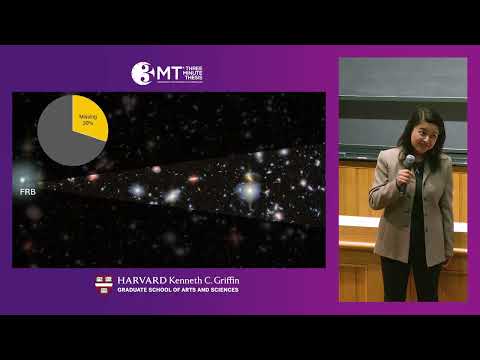
This research investigates the universe’s “missing” ordinary matter using Fast Radio Bursts (FRBs) as cosmic probes. By measuring how FRB signals are delayed while traveling through space, the study reveals that far more matter exists between galaxies than previously estimated, accounting for the long-standing missing baryon problem.

This research investigates extreme binary star systems containing white dwarfs using a multi-wavelength astronomical approach. The study discovered new low-level mass transfer systems, provided evidence for theories of white dwarf magnetism, and identified mysterious radio sources as magnetic binary systems. These findings improve understanding of high-energy astrophysical processes and stellar evolution.

This project develops a 200-metre space reflector antenna using a modular “LEGO-like” assembly system. Designed for compact launch and robotic construction, it enables stronger, higher-quality interstellar communication. The work also models structural behaviour during assembly and could support building other large space structures, advancing deep-space exploration.