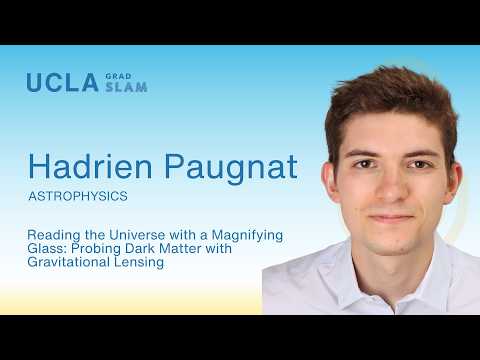
This research uses gravitational lensing to investigate dark matter, the invisible substance that makes up roughly 80% of the Universe's matter. By studying distortions in light caused by massive galaxies, it seeks to identify dark matter structures and determine whether dark matter is clumpy, smooth, cold, warm, concentrated, or diffuse.

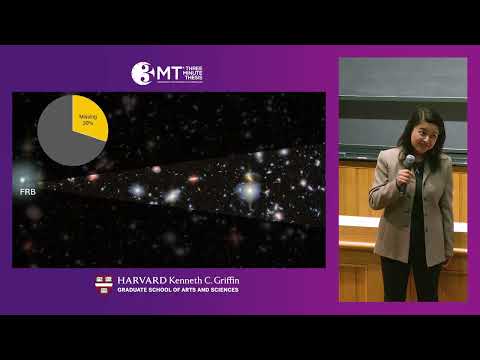
This research investigates the universe’s “missing” ordinary matter using Fast Radio Bursts (FRBs) as cosmic probes. By measuring how FRB signals are delayed while traveling through space, the study reveals that far more matter exists between galaxies than previously estimated, accounting for the long-standing missing baryon problem.

This research uses astroseismology — the study of stellar vibrations — to probe the hidden interiors of stars. By analyzing oscillations in red giant stars, the work reveals information about stellar core masses and uncovers evidence of ancient stellar mergers. Listening to stars provides insights impossible to obtain through observation alone.

This research develops advanced telescope technologies for directly imaging exoplanets located near bright stars. Using deformable mirrors and specialized optical screens to suppress starlight, the work aims to capture full-colour images of potentially habitable “Goldilocks” planets, helping scientists study planetary atmospheres, temperatures, and the possibility of extraterrestrial life.

This research identifies potentially habitable rocky exoplanets by measuring their densities, water content, and internal heating through orbital interactions and transit observations. Using these techniques, several promising ocean and volcanic worlds have been identified as targets for the James Webb Space Telescope in the search for extraterrestrial life and habitable environments.

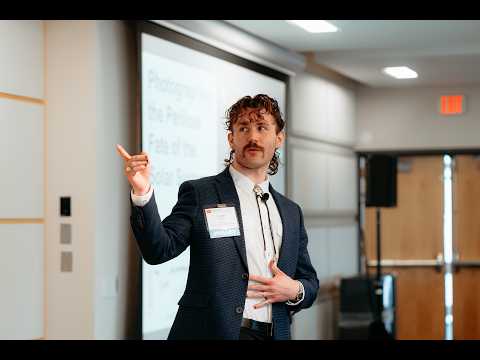
This research investigates the tilt of exoplanets to understand their formation and evolution. By developing a new measurement method, it identifies a Uranus-like tilted planet and enables broader study of planetary systems. These insights help reveal climates, histories, and potential habitability of distant worlds beyond our solar system.

This research investigates whether dark energy, responsible for the universe’s accelerating expansion, evolves over time rather than remaining constant. Using galaxy distributions, supernovae, and cosmic microwave data, new statistical methods suggest evolving models may better fit observations, potentially reshaping our understanding of cosmology and the universe’s long-term fate.

This research develops the Remnant Emission Survey Tool (REST) to identify dormant comets—objects that resemble asteroids but may contain ancient solar system chemistry. By analyzing archived images of 3,800 asteroid candidates for faint gas emissions, REST aims to improve classification and deepen understanding of planetary formation and solar system history.


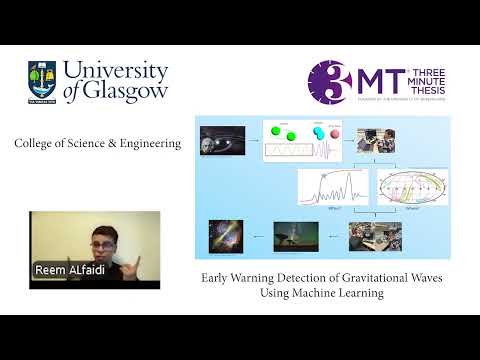
Only five percent of the universe is visible through light, leaving most of it unexplained. Gravitational waves provide a new way to explore this hidden cosmos. By detecting these signals early, researchers can predict cosmic collisions and coordinate telescopes in advance, enabling simultaneous observations that deepen our understanding of the universe.

This research investigates “zombie stars” — reanimated white dwarf systems formed through stellar interactions in binary star systems. By analyzing large-scale brightness variations across the Milky Way, the work identified hundreds of these rare objects, providing new insights into stellar evolution, galactic history, and the future lifecycle of stars in our universe.