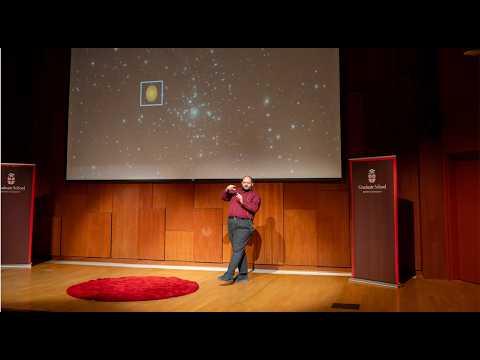
This research uses weak gravitational lensing to map the invisible distribution of dark matter within galaxy clusters. By measuring tiny distortions in the shapes of distant galaxies, it reconstructs total mass distributions, helping scientists understand dark matter, galaxy cluster evolution, and the large-scale structure and history of the universe.

This research combines galaxy simulations with machine learning to study the invisible gas surrounding galaxies. By training a neural network to interpret astronomical observations, the project creates a public tool—the Circumgalactic Dictionary—that enables previously impossible measurements, advancing our understanding of galaxy evolution and the origins of stars, planets, and life.