2026
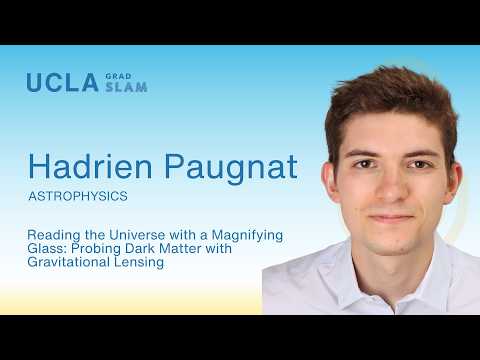
This research uses gravitational lensing to investigate dark matter, the invisible substance that makes up roughly 80% of the Universe's matter. By studying distortions in light caused by massive galaxies, it seeks to identify dark matter structures and determine whether dark matter is clumpy, smooth, cold, warm, concentrated, or diffuse.