This research explores the philosophical foundations of particle physics and the Standard Model. Focusing on neutrinos, it argues that these particles may be better understood as different states of a single entity rather than separate objects. The project aims to develop a deeper ontology describing the fundamental structure of physical reality.

This research investigates gravitational-wave memory, a permanent distortion left in spacetime after black hole mergers. Using computational solutions to Einstein’s equations, the work predicts detectable memory signals for observatories like LIGO, helping probe fundamental spacetime symmetries, gravitational physics, and the connection between classical gravity and quantum theories of the universe.

This research investigates the area law conjecture in quantum physics, which proposes that information shared within quantum systems scales with boundaries rather than total particle number. By developing new mathematical tools for tracking and compressing quantum information, the work aims to simplify the analysis of extremely complex systems in physics, chemistry, and materials science.

This research investigates whether dark energy, responsible for the universe’s accelerating expansion, evolves over time rather than remaining constant. Using galaxy distributions, supernovae, and cosmic microwave data, new statistical methods suggest evolving models may better fit observations, potentially reshaping our understanding of cosmology and the universe’s long-term fate.

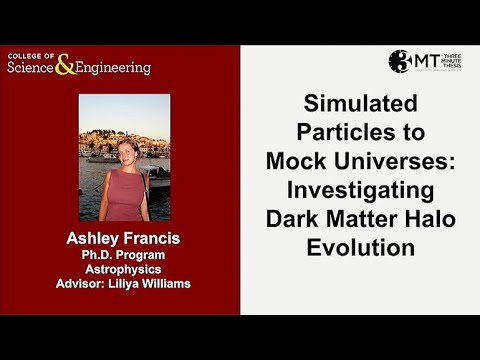
Dark matter makes up most of the universe but cannot be directly observed. This research studies how dark matter halos evolve using cosmological simulations and the principle of maximum entropy. Results show halo entropy increases over time, indicating their evolution toward equilibrium follows fundamental thermodynamic principles.


This research develops a theoretical framework for understanding electron–hole interactions in quantum dots, focusing on positive and negative trions. By analytically modeling their behavior under electric and magnetic fields, it bridges gaps between theory and experiment, supporting advances in quantum electronics, energy technologies, and targeted medical applications.

This research examines unexpected beauty-quark decay patterns observed at LHCb that violate Standard Model predictions. The anomalies suggest a new force and a hypothetical leptoquark particle that couples mainly to third-generation matter. By modelling these effects, the work guides experimental searches and may shed light on the long-standing mystery of particle-generation hierarchies.