This research investigates gluon saturation, an extreme state of matter that existed immediately after the Big Bang. By developing precise theoretical calculations for particle collision experiments, it helps scientists understand how gluons bind quarks to form matter, revealing the fundamental processes that shaped the early universe and made life possible.
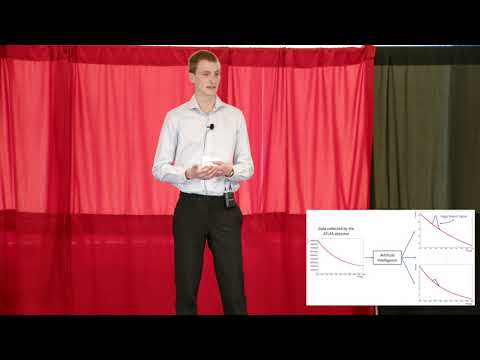
This research uses AI to detect subtle interactions between the Higgs boson and muons at the Large Hadron Collider. By refining large datasets, it aims to uncover how particles acquire mass at smaller scales. Confirming this interaction would deepen understanding of the Higgs field and fundamental physics.
2020
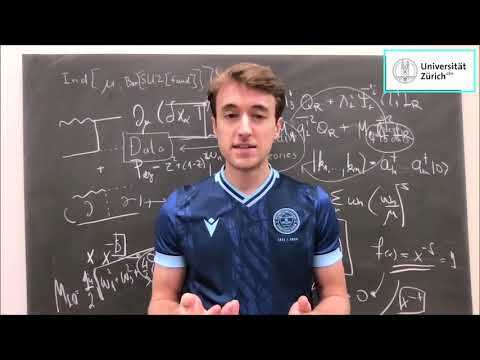
This research examines unexpected beauty-quark decay patterns observed at LHCb that violate Standard Model predictions. The anomalies suggest a new force and a hypothetical leptoquark particle that couples mainly to third-generation matter. By modelling these effects, the work guides experimental searches and may shed light on the long-standing mystery of particle-generation hierarchies.