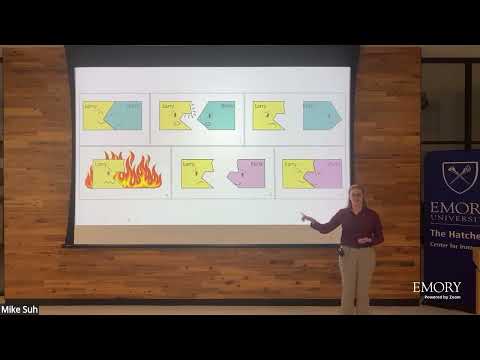
This research develops nanoscale robots made from synthetic DNA capable of navigating and manipulating molecular environments. Using programmable DNA interactions and thermodynamic processes, the work focuses on maze-solving behaviors as a foundation for future applications including allergen removal, nanomaterial assembly, tissue engineering, and programmable molecular systems operating in the physical world.

This research reconstructs viral transmission trees using genomic sequencing data to study how human behavior shapes infectious disease outbreaks. Analyzing COVID-19 transmission in Iceland revealed differences in infectiousness across quarantined and demographic groups, informing vaccine distribution strategies that improved population-level protection and influenced national public health policy.

This research applies large language models to decode and design proteins by treating amino acid sequences as biological languages. By identifying hidden structural and functional patterns across massive protein datasets, the work enables creation of novel proteins for medicine, cancer therapy, carbon capture, and environmental remediation beyond naturally evolved biological systems.

This research uses natural language processing techniques to uncover evolutionary relationships between ancient proteins. By analyzing contextual patterns among amino acids, the new computational tool can identify connections between proteins that diverged billions of years ago, helping scientists reconstruct the history of early microbial life and Earth’s biological evolution.

Viruses build protective shells by following simple local connection rules between proteins. Using graph theory and network-based mathematical analysis, this research studies how these local interactions produce complex viral shell structures. Understanding these rules may help design nanoscale capsules for targeted drug delivery and other biomedical applications.

About 8% of the human genome originates from ancient viruses. This research uses bioinformatics and evolutionary comparisons to understand why viral DNA persists and how cells silence it through DNA methylation. Identifying how genomes separate useful from non-functional DNA helps clarify which genetic elements matter for human health and disease.

This research uses a computational method called MELT to identify hidden allosteric pockets in shape-shifting proteins like BCR–ABL kinase. By targeting these pockets, drugs can stabilize inactive protein states, overcoming resistance caused by protein flexibility and enabling more effective, adaptable strategies for drug discovery.

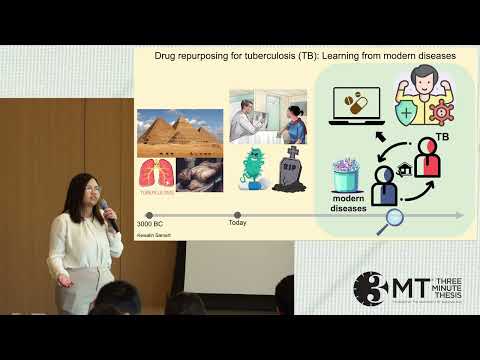
Tuberculosis remains deadly despite relying on decades-old antibiotics. This research uses computational methods to identify immune response similarities between TB and other diseases, enabling drug repurposing. By borrowing already approved treatments, this approach aims to restore immune balance, combat drug resistance, and accelerate the development of new TB therapies.

This research develops a computational method for detecting hidden RNA viruses within existing RNA sequencing datasets. By identifying conserved viral protein signatures, the approach enables large-scale discovery of previously unknown viruses, improving understanding of viral diversity, disease mechanisms, and future opportunities for diagnostics, surveillance, and antiviral treatment development.