This research develops cavity-based methods for controlling thermal radiation by transforming random heat emission into coherent, directional thermal beams. Unlike traditional narrowband approaches, the technique enables broadband heat control using practical materials such as silicon and germanium, with potential applications in energy efficiency, waste-heat recycling, cooling technologies, and climate mitigation.

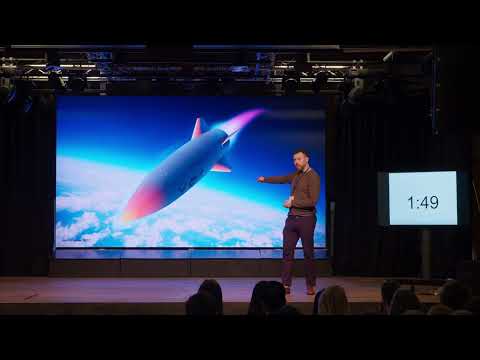
Hypersonic missiles generate plasma that can interfere with radar detection. This research uses open-source, physics-based simulations to model plasma formation efficiently. Results show plasma usually has little effect on radar, but when it does, the method provides industry with a fast, cost-effective way to design improved radar systems for missile detection.