This research develops 3D-printed hydroxyapatite scaffolds that actively stimulate bone regeneration. Unlike traditional bone grafts, these synthetic scaffolds recruit stem cells and encourage new bone formation. Animal studies show promising healing results, raising the possibility of personalised, patient-specific implants that improve recovery from severe bone injuries and defects.

This research develops realistic surgical simulation models using 3D printing to improve training for complex procedures. By enabling repeated practice in a safe environment, the models enhance skill, confidence, and performance. The work aims to make advanced surgical training more accessible while reducing errors and improving patient outcomes.

2026
Inspired by bird flight, this research investigates how wingtip feathers influence aerodynamics. Using bioinspired design, 3D-printed models, and wind tunnel experiments, it isolates the effects of feather separation, bending, and twisting. These insights improve aircraft stability, lift, and maneuverability, offering pathways to safer and more efficient aviation in turbulent environments.
This thesis developed multifunctional 3D-printed scaffolds for repairing critical-size mandibular bone defects. Using bioactive ceramics, surface coatings, and prevascularization strategies, it promoted both osteogenesis and angiogenesis. Results show that combining geometry, materials, and biological signals enables synergistic tissue regeneration, offering less-invasive alternatives to autologous bone grafts.

This research designs bespoke, lightweight 3D-printed breast prostheses for women after mastectomy. Using body scanning and personalised materials, the prostheses improve comfort, symmetry, and fit compared to standard silicone forms. The project aims to help women move from surviving breast cancer to thriving with confidence and comfort.
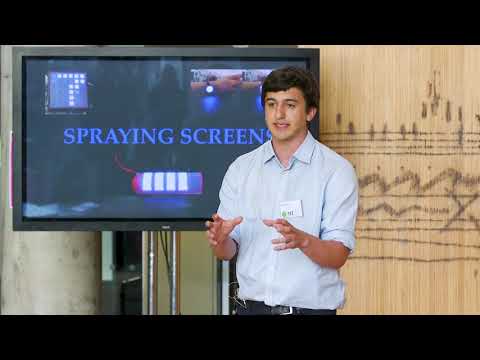
This research explores sprayable electroluminescent materials that allow users to create displays of any shape on almost any surface. By combining conductive 3D-printed structures with sprayed active layers, the project aims to democratise display fabrication, decentralise production, and enable new forms of human–computer interaction beyond traditional rectangular screens.