This research focuses on improving the safety of software in critical systems like cars, medical devices, and aircraft. By combining mathematical verification with modeling and simulation, it aims to detect faults before deployment. The goal is to prevent catastrophic failures and ensure that life-critical technologies can be trusted.
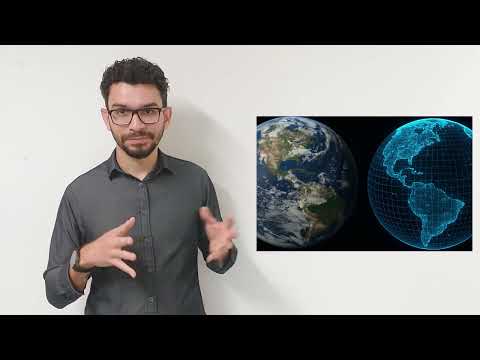
This research explores next-generation digital twins—virtual representations of real-world systems that support decision-making through simulation and AI. By combining decentralization, privacy-preserving architectures, explainable AI, and scenario analysis, the work aims to help individuals and organizations evaluate alternative futures, make informed decisions, and build more transparent intelligent systems.
My research uses high-resolution maps and video-game simulation software to model future flooding in Abu Dhabi under projected sea-level rise. The immersive tool helps identify risks, guide infrastructure adaptation, protect sensitive areas, and support long-term planning. By visualizing future scenarios, the project empowers communities and policymakers to take proactive climate action.