This research develops scalable motion-planning algorithms that enable large teams of robots to work together safely and efficiently. By combining machine learning with search algorithms, the work delivers both speed and reliability, supporting applications from automated warehouses to disaster response, infrastructure repair, and future space exploration.

2026
This research explores how heterogeneous AI agents can establish common ground during collaboration. By separating communication and action into distinct decision-making policies, agents can engage in micro-conversations that create shared understanding. The work aims to improve teamwork among diverse robots and support future human-AI collaboration in complex environments.
This research combines bio-inspired robotics and reinforcement learning to develop adaptable amphibious robots modeled after sea turtles. By learning through trial and error across diverse terrains, these robots can adjust their movement strategies in real time, improving performance in applications such as environmental monitoring, search and rescue, and agriculture.

2026
This research investigates how reliance on AI systems affects human cognition and reasoning. Using concepts from cognitive offloading, the study compares AI-assisted and independent problem solving, measuring verification behavior, reasoning depth, and decision confidence. The work explores whether increasingly capable AI tools may unintentionally reduce critical thinking and human expertise.
2025
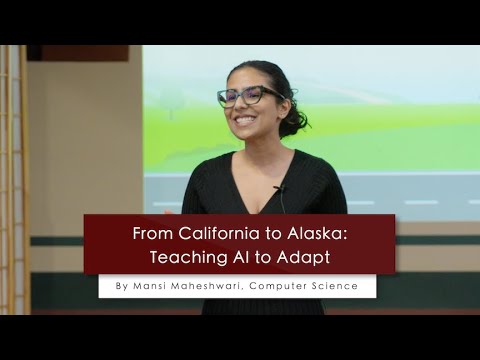
This research explores how artificial intelligence systems can continue learning without forgetting previously acquired knowledge. Instead of erasing old information, the proposed method compresses knowledge into more efficient representations, allowing AI systems such as self-driving cars to adapt safely to new environments while avoiding dangerous performance failures during learning.

2025
This research explores next-generation digital twins—virtual representations of real-world systems that support decision-making through simulation and AI. By combining decentralization, privacy-preserving architectures, explainable AI, and scenario analysis, the work aims to help individuals and organizations evaluate alternative futures, make informed decisions, and build more transparent intelligent systems.