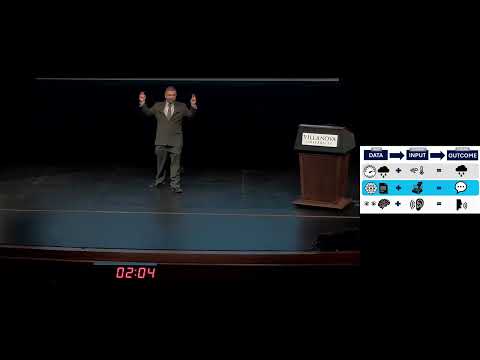
This research investigates how reliance on AI systems affects human cognition and reasoning. Using concepts from cognitive offloading, the study compares AI-assisted and independent problem solving, measuring verification behavior, reasoning depth, and decision confidence. The work explores whether increasingly capable AI tools may unintentionally reduce critical thinking and human expertise.
This neuroscience research investigates how the human brain constructs and adapts goals. Using fMRI and a dynamic decision-making game, the study identifies neural activity in the prefrontal cortex and anterior cingulate cortex associated with goal selection, valuation, and adaptation. The findings may help develop AI systems better aligned with human goals.
This research exposes a hidden privacy risk in online voting and video conferencing: eye movements captured by standard webcams can reveal user choices. Using AI models, voting decisions were inferred with over 95% accuracy, highlighting that digital security must address behavioral signals—not just encryption.
This research explores next-generation digital twins—virtual representations of real-world systems that support decision-making through simulation and AI. By combining decentralization, privacy-preserving architectures, explainable AI, and scenario analysis, the work aims to help individuals and organizations evaluate alternative futures, make informed decisions, and build more transparent intelligent systems.