
This research examines why AI adoption often fails in medium-sized businesses despite significant investment. By interviewing employees and leaders, it develops a practical framework that treats AI as a new colleague requiring onboarding, trust, and cultural integration. The findings will help organisations implement AI more successfully and improve long-term adoption.

2026
This research explores how heterogeneous AI agents can establish common ground during collaboration. By separating communication and action into distinct decision-making policies, agents can engage in micro-conversations that create shared understanding. The work aims to improve teamwork among diverse robots and support future human-AI collaboration in complex environments.
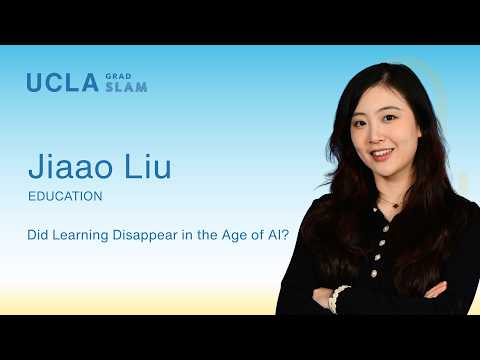
This research examines how multilingual college students use AI writing tools and whether these tools support or hinder learning. The findings suggest that learning outcomes depend on how AI is used. When employed as a scaffold for feedback and reflection rather than a shortcut, AI can enhance writing development and critical thinking.

2025
This research explores next-generation digital twins—virtual representations of real-world systems that support decision-making through simulation and AI. By combining decentralization, privacy-preserving architectures, explainable AI, and scenario analysis, the work aims to help individuals and organizations evaluate alternative futures, make informed decisions, and build more transparent intelligent systems.

As generative AI reshapes the advertising industry, this research shows creativity is not replaced but redistributed. Through interviews and immersive fieldwork, a four-stage framework—readiness, co-creativity, validation, and execution—reveals how humans and AI can collaborate to amplify creative potential rather than diminish it.
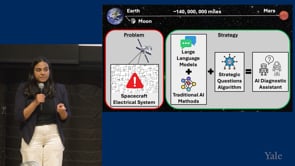
This research develops an onboard AI diagnostic assistant for space missions that can independently investigate life-critical anomalies. By learning how humans ask strategic diagnostic questions, the system combines language models and traditional AI to actively reason through unprecedented spacecraft failures when communication with Earth is delayed.

2025
This research develops human–AI methods to prioritize massive data streams, especially in public health. By combining expert expectations with extreme value theory, it ranks events by contextual importance, reducing alert overload. Deployed nationally, the approach triaged thousands of outbreaks and data-quality issues, making big data interpretable, actionable, and life-saving decisions.