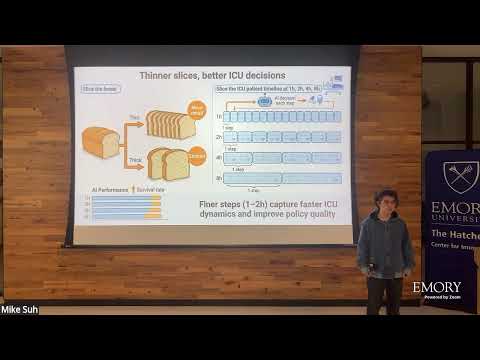
This research investigates how the choice of time interval affects reinforcement learning models for sepsis treatment in intensive care. By comparing one-, two-, four-, and eight-hour patient timelines, it demonstrates that shorter intervals better capture patient dynamics, improve estimated survival outcomes, and may enable more effective AI-assisted clinical decision-making.
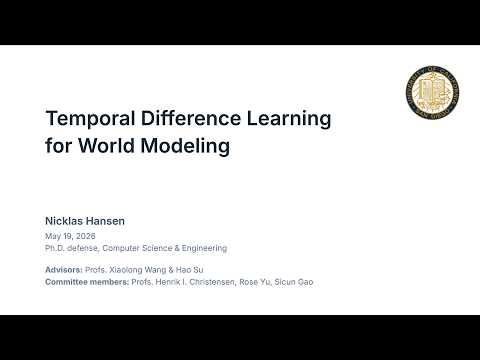
This dissertation presents temporal-difference learning methods for building world models that enable intelligent agents and robots to predict, plan and act. It introduces TD-MPC, which learns compact latent dynamics, rewards and value estimates for model-predictive control, and TD-MPC2, a more robust successor requiring little task-specific tuning. Experiments demonstrate faster real-world robot learning, scalable multitask performance and a unified model spanning 200 tasks across ten domains. The research also examines interactive generative world models and their tendency to hallucinate physically implausible futures. Targeted data collection in uncertain regions substantially reduces these errors, suggesting routes toward safer, uncertainty-aware autonomous systems and robotics.
2026
This research investigates how the brain makes decisions under uncertainty by studying mice navigating reward-based mazes. Rather than relying on memorisation, mice continually update mental models through active exploration. These findings improve our understanding of anxiety disorders and may inspire more adaptive artificial intelligence systems.

2026
This research explores how heterogeneous AI agents can establish common ground during collaboration. By separating communication and action into distinct decision-making policies, agents can engage in micro-conversations that create shared understanding. The work aims to improve teamwork among diverse robots and support future human-AI collaboration in complex environments.
2021
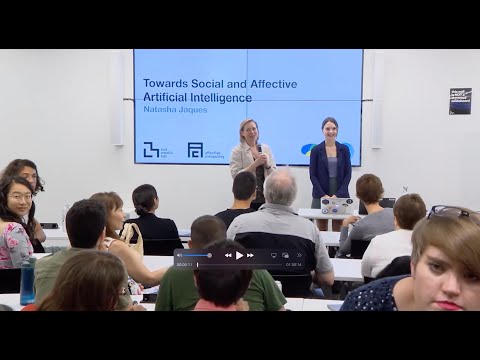
This PhD defense presents research at the intersection of machine learning, reinforcement learning, social learning, affective computing, and human-AI interaction. The thesis is that social learning is a powerful mechanism for intelligence and explores how AI agents can learn from one another and from humans. Projects include intrinsic social influence rewards for multi-agent coordination, communication protocols emerging through influence, conversational agents trained from implicit human feedback such as sentiment, generative models improved through facial-expression feedback, and personalized well-being prediction from behavioral and physiological data. The thesis concludes that socially informed learning can improve coordination, adaptability, and human alignment.
This research combines bio-inspired robotics and reinforcement learning to develop adaptable amphibious robots modeled after sea turtles. By learning through trial and error across diverse terrains, these robots can adjust their movement strategies in real time, improving performance in applications such as environmental monitoring, search and rescue, and agriculture.
2025
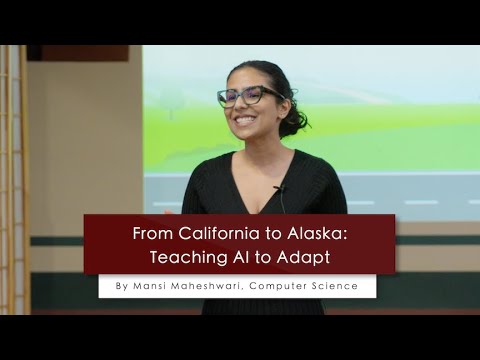
This research explores how artificial intelligence systems can continue learning without forgetting previously acquired knowledge. Instead of erasing old information, the proposed method compresses knowledge into more efficient representations, allowing AI systems such as self-driving cars to adapt safely to new environments while avoiding dangerous performance failures during learning.
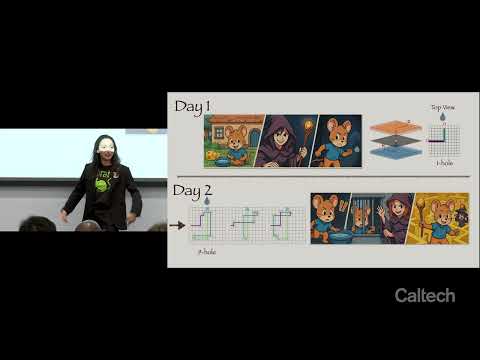
This research uses the Manhattan maze to study rapid learning and memory in mice. The study demonstrates that mice can acquire complex navigation sequences after only a few rewards, retain memories overnight, and generalize learned strategies to new mazes. The findings provide insights into few-shot learning, memory formation, and adaptive intelligence.
2025
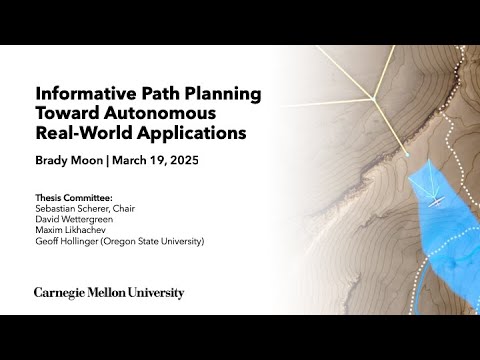
This thesis develops autonomous robotic systems for data gathering in complex real-world environments. It advances three areas: informative path planning, disturbance-aware planning, and predictive world modelling. The research introduces adaptive sampling-based planners for long-horizon information gathering, methods for estimating wind fields and planning safe, energy-aware UAV trajectories, and predictive mapping systems for indoor exploration. It also compares robot exploration strategies with human decision-making and uses those insights to build a reinforcement learning planner that performs at near-human level. Overall, the work shows that integrating long-horizon reasoning, environmental dynamics, and richer belief models can make autonomous robotic information gathering more effective, reliable, and scalable.
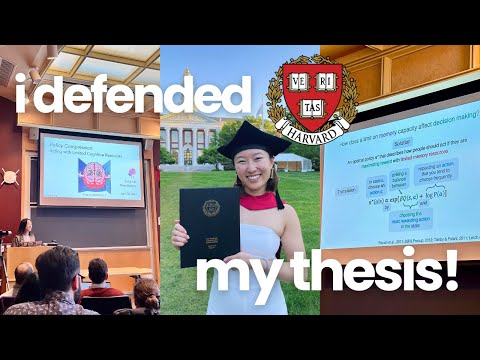
In our complex world, how do humans learn and make decisions when their cognitive resources are limited? My thesis introduces a new theory called "policy compression" to answer this question! The basic idea is that people simplify their decision-making processes to reduce the mental effort required, without significantly compromising the benefits or rewards of those decisions. I use computational modeling, human experiments, and brain studies in rats to explain why people exhibit certain decision-making patterns, like the tendency to stick with familiar choices, and why they use strategies like "chunking" to reduce mental load. I also propose that different brain regions work together to balance mentally taxing decisions with more automatic, habitual decisions. This allows the brain to optimize behavior in complex environments. In conclusion, my thesis offers a new way to understand how humans and animals make decisions with limited mental resources, and shows how the brain organizes itself to handle decision-making efficiently.