This research investigates how differences in butterfly behavior relate to brain evolution and memory. Heliconius butterflies showed superior long-term memory and enlarged mushroom body brain regions compared with related species. The work explores how neurogenesis shapes cognition and may ultimately contribute to understanding memory, brain development, and neurological disorders.
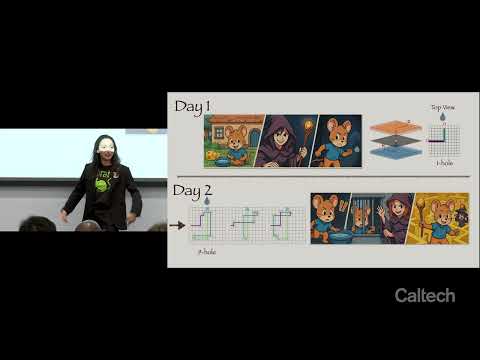
This research uses the Manhattan maze to study rapid learning and memory in mice. The study demonstrates that mice can acquire complex navigation sequences after only a few rewards, retain memories overnight, and generalize learned strategies to new mazes. The findings provide insights into few-shot learning, memory formation, and adaptive intelligence.

This research examines song dialects in vervain hummingbirds, revealing distinct geographic “dialect neighbourhoods” that change over time. Findings suggest possible open-ended vocal learning, a rare trait in hummingbirds. The study highlights parallels between human and animal communication, showing that even small birds possess complex, learned, and evolving vocal systems.

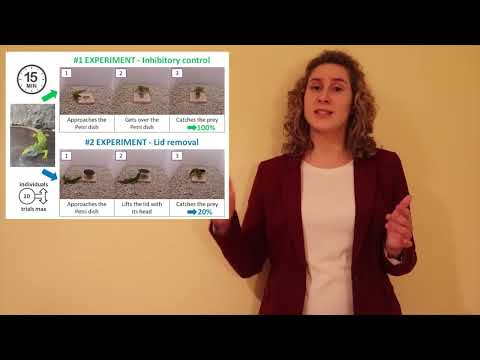
This research tests cognitive abilities in European green lizards using inhibitory control and problem-solving tasks. All males solved the detour challenge, and two solved the more complex lid-removal task, demonstrating that reptiles have developed learning abilities. The study advances understanding of reptile cognition and its role in the evolution of animal intelligence.