This research develops advanced brain-machine interface systems to improve life for spinal cord injury patients. Using neural networks such as FinNet and dynamic recurrent neural decoders, the work aims to better extract and translate brain activity into movement while creating low-power hardware capable of supporting long-term practical neuroprosthetic applications.
This research investigates how the brain uses different decision-making strategies and how those strategies vary across individuals, including people with neurodivergent conditions such as autism, schizophrenia, and ADHD. Using controlled game environments and brain imaging, the study maps neural decision-making circuits to better understand cognition, behavioural diversity, and potential therapeutic interventions.
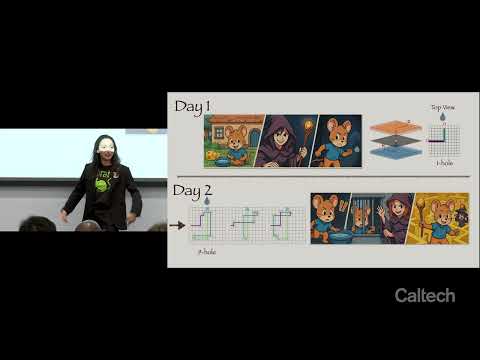
This research uses the Manhattan maze to study rapid learning and memory in mice. The study demonstrates that mice can acquire complex navigation sequences after only a few rewards, retain memories overnight, and generalize learned strategies to new mazes. The findings provide insights into few-shot learning, memory formation, and adaptive intelligence.
This neuroscience research investigates how the human brain constructs and adapts goals. Using fMRI and a dynamic decision-making game, the study identifies neural activity in the prefrontal cortex and anterior cingulate cortex associated with goal selection, valuation, and adaptation. The findings may help develop AI systems better aligned with human goals.