This research investigates how people strategically spread gossip by reasoning about social networks. Through laboratory experiments and real-world friendship networks, it shows that individuals balance social distance and popularity to maximize information spread while minimizing personal risk, revealing sophisticated cognitive mechanisms that support human communication and social intelligence.

2026
This research explores why former human traffickers in Indonesia stopped offending. Through interviews with ten ex-traffickers, the study found that marriage and parenthood often triggered moral transformation by creating empathy and shame. The findings suggest trafficking prevention should focus not only on punishment, but also on strengthening families and social bonds.

2026
This research explores how sports fans understand sports-related tattoos as expressions of identity and commitment. Through interviews with tattooed fans, the study reveals that sports tattoos function as permanent, deeply personal symbols of fandom, memory, and values, extending beyond traditional consumer behaviors such as jerseys, merchandise, or attending games.
2026
This research investigates how reliance on AI systems affects human cognition and reasoning. Using concepts from cognitive offloading, the study compares AI-assisted and independent problem solving, measuring verification behavior, reasoning depth, and decision confidence. The work explores whether increasingly capable AI tools may unintentionally reduce critical thinking and human expertise.
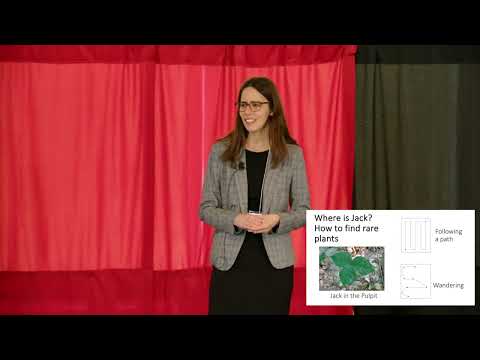
This study compares systematic versus exploratory search strategies for locating rare plants. Surprisingly, both methods performed equally, with low detection overall. Challenges such as navigation difficulty and multitasking may explain the results. The findings highlight the need for improved search methods to better identify and protect rare, threatened plant species.
2026
This talk explores emotional resistance to AI through a personal storytelling project. It argues that AI adoption is an adaptive challenge tied to identity, not just technology. Using Robert Kegan’s framework, it demonstrates how testing limiting beliefs can reduce resistance, emphasizing that successful AI integration depends on addressing human concerns about autonomy, competence, and connection.
This research shows how urban design shapes daily mobility and social encounters. Access to shops and transport influences how often people travel, how long they stay out, and who they meet. Cities do not just organize movement—they also structure social segregation and diversity through spatial design.