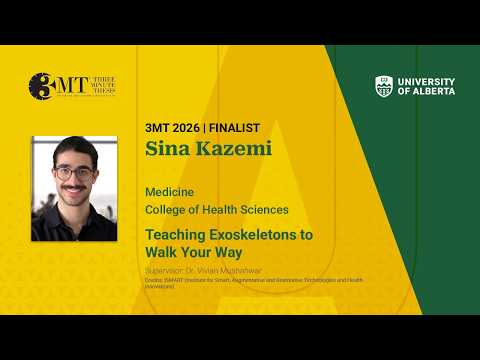
This research develops digital twin systems to personalise robotic exoskeleton movement. By integrating biomechanical modelling with real-time robotic control, it enables adaptive, user-specific walking patterns. The approach aims to improve rehabilitation outcomes by making assistive devices more natural, responsive, and aligned with individual movement needs.
Inspired by biological reproduction, this research uses evolutionary algorithms to evolve mathematical equations that describe physical systems. Unlike black-box AI, these models are transparent and adaptable. By combining evolution with graph neural networks, the approach improves simulations for applications such as traffic control, robotics, and engineering design.
2025
My research improves brain–computer interfaces for children with disabilities by reducing the repetitive calibration needed before use. Using transfer learning and a team-selection algorithm, data from other users help personalise the system, cutting calibration by up to 90%. This makes creative activities like painting more accessible, enjoyable, and sustainable.