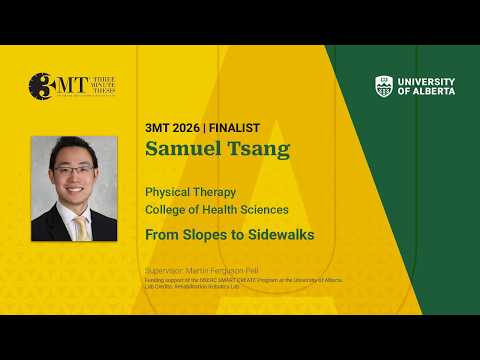
his research develops a classification system for wheelchair navigation based on surface difficulty, inspired by ski trail ratings. By measuring vibration and effort across urban environments, it aims to provide users with actionable information to support safer route choices, reduce injury risk, and improve independence and accessibility in everyday mobility.
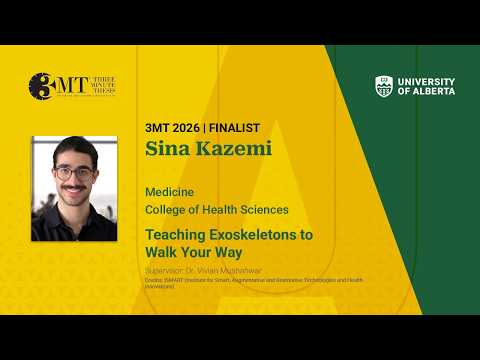
This research develops digital twin systems to personalise robotic exoskeleton movement. By integrating biomechanical modelling with real-time robotic control, it enables adaptive, user-specific walking patterns. The approach aims to improve rehabilitation outcomes by making assistive devices more natural, responsive, and aligned with individual movement needs.
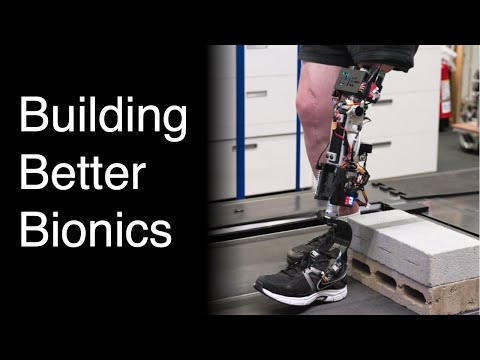
This defense argues prostheses must exchange information, not just energy, with the nervous system. It combines soft-tissue AMI revision, osseointegration with implanted electrodes (OMP), and impedance control to enable continuous powered-knee modulation. Pilot studies show improved neuromechanics, cortical activation, cleaner EMG, better task performance, and greater embodiment versus socket-based approaches.