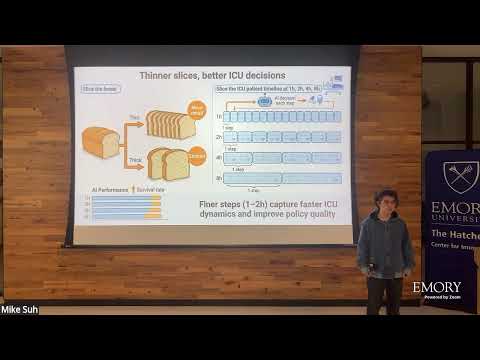
This research investigates how the choice of time interval affects reinforcement learning models for sepsis treatment in intensive care. By comparing one-, two-, four-, and eight-hour patient timelines, it demonstrates that shorter intervals better capture patient dynamics, improve estimated survival outcomes, and may enable more effective AI-assisted clinical decision-making.
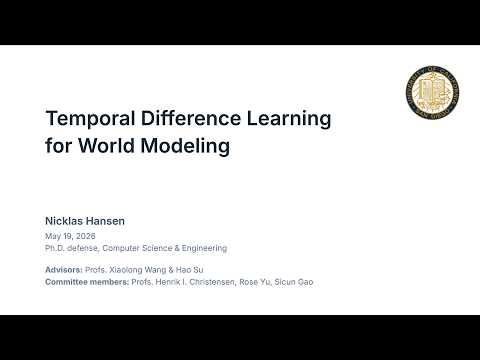
This dissertation presents temporal-difference learning methods for building world models that enable intelligent agents and robots to predict, plan and act. It introduces TD-MPC, which learns compact latent dynamics, rewards and value estimates for model-predictive control, and TD-MPC2, a more robust successor requiring little task-specific tuning. Experiments demonstrate faster real-world robot learning, scalable multitask performance and a unified model spanning 200 tasks across ten domains. The research also examines interactive generative world models and their tendency to hallucinate physically implausible futures. Targeted data collection in uncertain regions substantially reduces these errors, suggesting routes toward safer, uncertainty-aware autonomous systems and robotics.

2021
This PhD defense presents research at the intersection of machine learning, reinforcement learning, social learning, affective computing, and human-AI interaction. The thesis is that social learning is a powerful mechanism for intelligence and explores how AI agents can learn from one another and from humans. Projects include intrinsic social influence rewards for multi-agent coordination, communication protocols emerging through influence, conversational agents trained from implicit human feedback such as sentiment, generative models improved through facial-expression feedback, and personalized well-being prediction from behavioral and physiological data. The thesis concludes that socially informed learning can improve coordination, adaptability, and human alignment.

2026
This research develops adaptable machine learning methods for wildlife monitoring using camera trap images. By clustering visually similar animal images, the system dramatically reduces the amount of manual labeling required while maintaining accuracy. The approach could enable faster, large-scale biodiversity monitoring critical for protecting endangered species worldwide.
2025
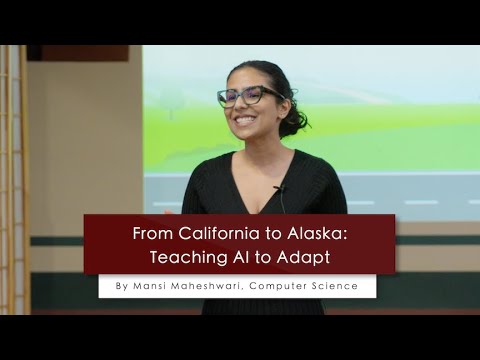
This research explores how artificial intelligence systems can continue learning without forgetting previously acquired knowledge. Instead of erasing old information, the proposed method compresses knowledge into more efficient representations, allowing AI systems such as self-driving cars to adapt safely to new environments while avoiding dangerous performance failures during learning.
2025
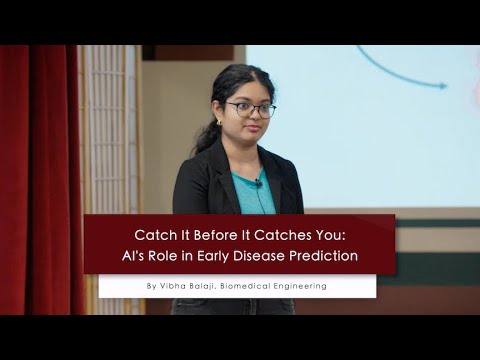
This research uses artificial intelligence to predict the progression of Alzheimer’s disease and cancer using medical imaging data. By analyzing brain scans, tumor scans, and treatment responses, AI models can forecast disease development and treatment outcomes, enabling earlier intervention, more personalized care, and improved quality of life for aging populations.
2025
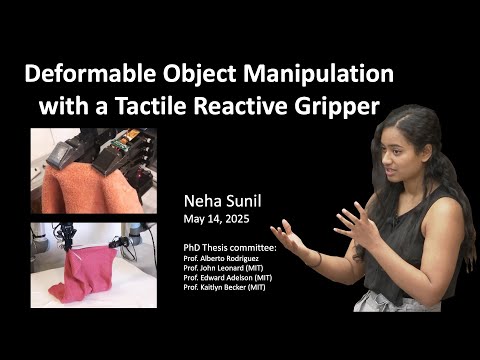
This research presents a modular visuotactile robotic system for manipulating deformable objects such as cables, towels, and garments. Unlike rigid-object manipulation, deformables pose challenges due to occlusion, complex dynamics, and high variability. The system combines vision for global context and tactile sensing (GelSight) for precise local control, enabling tasks like cable tracing, cloth edge following, towel folding, and garment handling. It uses reactive control, learned dynamics (LQR), affordance models, and dense correspondence to generalise across tasks and objects. A key innovation is shifting from global state estimation to local, feedback-driven manipulation, improving robustness, efficiency, and real-world applicability in domains like manufacturing, healthcare, and assistive robotics.
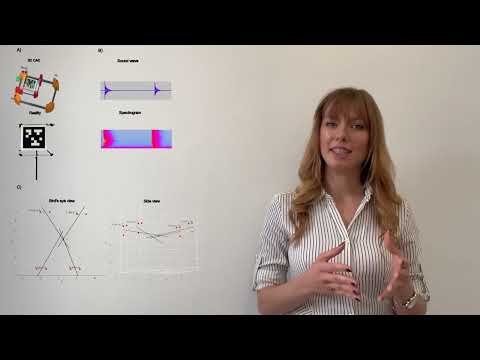
This thesis developed a real-time system for detecting, classifying, and locating sound events using only audio data. A network of 16 microphones and deep learning techniques achieved 96% classification accuracy and average localization error of 1.4 meters, demonstrating that sound-based analysis can effectively replace vision in monitoring applications.
This study evaluated a PointNet++ deep learning model for binary classification of Pinus sylvestris and Quercus pyrenaica using only LiDAR 3D point clouds. A balanced dataset of 160 trees achieved 91% accuracy, showing that geometric features alone can effectively discriminate species, highlighting the potential of lightweight AI models for forest inventories.