This research develops a brain-inspired optical imaging system that mimics human vision to reconstruct objects hidden by fog, smoke, and biological tissue. Combining event-based cameras, spiking neural networks, and neuromorphic processors, it enables fast, energy-efficient imaging with applications in autonomous vehicles, emergency response, and non-invasive medical diagnostics.
This research develops scalable motion-planning algorithms that enable large teams of robots to work together safely and efficiently. By combining machine learning with search algorithms, the work delivers both speed and reliability, supporting applications from automated warehouses to disaster response, infrastructure repair, and future space exploration.
This research develops a distributed multi-robot task allocation framework that enables autonomous robots to estimate tasks, share information, coordinate assignments, and avoid collisions without relying on a central server. The approach improves efficiency, scalability, and resilience, with applications in emergency response, particularly supporting firefighters during life-saving operations.
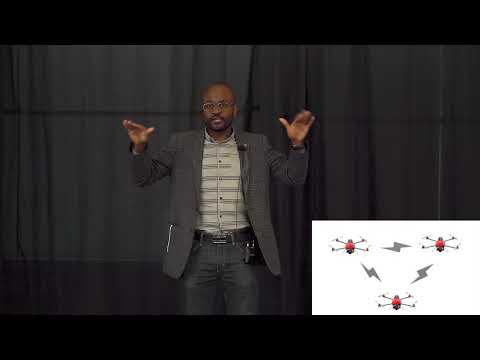
This research improves drone-based search and rescue by creating networks of communicating drones that optimize data routing. Inspired by traffic flow, it minimizes delays by avoiding congested paths. Faster data transmission enables quicker detection and response, allowing larger areas to be searched efficiently and increasing the chances of saving lives.

This research examines the ethical dilemmas behind food distribution during disasters, focusing on fairness, power, and decision-making in humanitarian aid. Through interviews in Bangladesh, it aims to develop an ethical framework to guide organisations toward just and transparent food allocation, ensuring aid preserves dignity as well as saving lives.
This research explores swarms of small, modular robots that cooperate like ant colonies to perform complex tasks. Using control theory, optimization, and machine learning, the work enables resilient, energy-efficient robotic systems that adapt in real time, with applications ranging from disaster response and space exploration to medical technologies.
2025
My research develops fault-tolerant, cooperative control algorithms for multi-drone formations carrying shared payloads. By detecting motor failures, restoring lost force, and autonomously reconfiguring drone positions, the system reduces load disturbances by up to 90%. These methods enable safer, more reliable drone-assisted rescue and delivery operations in hazardous conditions.