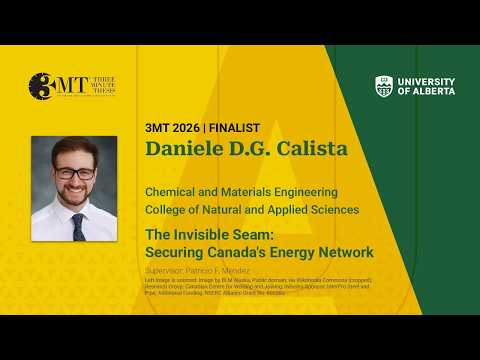
This research improves electric resistance welding by modelling heat transfer and weld formation physics. By identifying and controlling the weld point location, it replaces trial-and-error with predictive engineering rules. The work enables stronger, safer pipelines, supporting the adoption of advanced materials needed for reliable infrastructure in a clean energy future.
This research addresses overheating in 5G base stations, where vertically mounted electronics create dangerous hotspots. By using passive vapor chamber cooling, heat is efficiently redistributed without added energy use. Experimental and modeling work shows vapor chambers improve reliability and sustainability, supporting faster, more stable 5G and future network infrastructure.
This talk reframes the myth of Icarus to explain modern challenges in spacecraft design. Flexible solar panels deform in sunlight, limiting performance. The researcher builds and models new thermally stable “spacecraft wings” that resist bending and overheating, enabling larger, lighter, more reliable structures for future deep-space exploration.